Mary Anne Moisan’s Husband Has a Genetic Disease That Causes Strokes and Dementia. Then Their 5-Year-Old Rosalyn Said, ‘Mommy, I Just Went Blind.’

Mary Anne Moisan was chopping vegetables in her kitchen when her 5-year-old daughter, Rosalyn, told her she had just gone blind. For most parents, words like that would be frightening. For Moisan, they landed on top of a fear she had been carrying for years.
Her husband, Rick, has CADASIL, an inherited disease of the brain’s blood vessels that causes strokes and can lead to dementia. Each of the couple’s two children had a 50/50 chance of carrying it too. Moisan, a writer and retired physical and occupational therapist in Maine, told the story in a personal essay for Newsweek, adapted from her upcoming memoir.
A Diagnosis That Ran Through Rick’s Family
The disease reached the family through Rick’s mother. She was diagnosed with CADASIL first, and Rick tested positive shortly afterward, Moisan wrote. He was 50 years old at the time. Their children were only 1 and 4.
Rick has five siblings, and the news rippled outward. CADASIL is autosomal dominant, which means a parent who carries the faulty gene has a 50/50 chance of passing it to each child. Moisan wrote that the disease has no cure.
MedlinePlus Genetics, run by the National Library of Medicine, says CADASIL affects at least 2 to 4 in 100,000 people and may be more common than once thought. One altered copy of the gene can be enough to cause it, and symptoms vary widely, even within the same family. For some people, a stroke or mini-stroke is the first sign.
The National Institute of Neurological Disorders and Stroke describes CADASIL as a rare inherited disorder in which thickened blood vessel walls restrict blood flow to the brain. It is caused by changes in the NOTCH3 gene. Common features include migraine with aura, repeated strokes that can lead to dementia, and a slow decline in memory and thinking. Signs usually appear between ages 20 and 40, and rarely they begin in childhood, according to the agency.
Rick was not showing significant signs of the disease early on, his wife wrote. But one early warning sign is migraine with aura, and his vision blurred during his migraines. That detail is why Rosalyn’s words in the kitchen hit so hard.
“It Got All Fuzzy”
Then Rosalyn explained what she meant. She had been watching TV, she told her mother, when the picture “got all fuzzy” and she could no longer see it.
Sudden trouble seeing is one of the warning signs of a stroke listed by the Centers for Disease Control and Prevention, and Britain’s NHS lists “blurred vision or loss of sight in 1 or both eyes” among stroke symptoms. The NHS also says symptoms can stop after a short time and still need medical help right away.
To another parent, it might have sounded like a tired child or a strange moment in front of a screen. To a mother who knew that blurred vision could be tied to the disease in her husband’s family, it sounded like a possible first symptom.
Moisan’s essay lists other early signs of the disease: headaches, depression, learning difficulties and attention problems at school. None of them is proof of anything on its own, which is part of what makes living with an inherited risk so draining for families.
Testing a Child for an Adult Disease
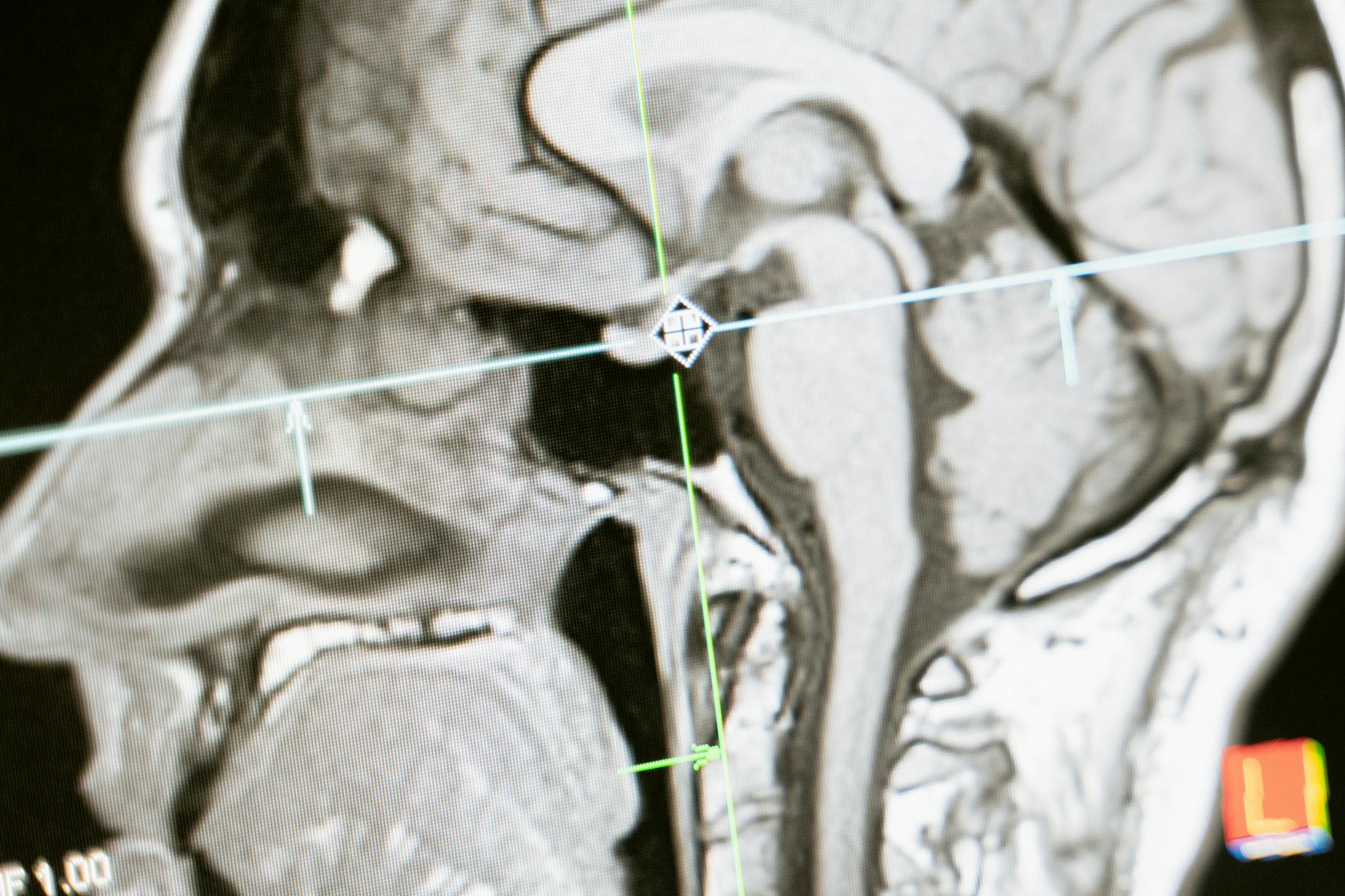
The family took Rosalyn to a pediatric neurologist. Moisan wrote that the doctor “was hesitant at first, but agreed to test her because she was showing this one obvious symptom of CADASIL.” Rosalyn had a blood test and a brain MRI.
The hesitation had a reason. Medical ethics guidance generally advises waiting until children are adults before testing them for diseases that start in adulthood, Moisan noted, citing what is often called a child’s “right to an open future.”
The American Medical Association’s Code of Medical Ethics spells this out. Its opinion on genetic testing of children says physicians should generally not offer or recommend a test when parents ask for one for a child at risk of an adult-onset condition with no effective treatments. Instead, doctors are told to explain the test and why it is not recommended. Rosalyn was not a healthy child being screened, though. She had a symptom, and that is what moved the neurologist to agree to the test.
Moisan also wrote that the neurologist never referred the family to a genetics specialist, a step she considers a miss.
The Call That Brought Relief
Then the family waited for the phone to ring. When the call came, the result was negative. “Rosalyn did not have CADASIL,” Moisan wrote.
“The relief was palpable. One child safe, at least from this specific malady,” she added.
That left the couple’s son, Calvin. Now 34, he spent years not wanting to know his status, worried about what a positive result would do to his life, his mother wrote. He is now scheduled for testing, and Moisan wrote that his decision brings her relief.
Living With a 50/50 Question
For families like the Moisans, a genetic disease is not only about the person who has it. It is about every child at the dinner table, every headache, every blurry moment that might mean something or nothing at all.
According to the NINDS, there is currently no cure or effective treatment for CADASIL. Care centers on lowering stroke risk by controlling blood pressure, cholesterol and blood sugar, sometimes with antiplatelet medication, along with avoiding smoking and treating migraines and depression. By age 65, most people with the disease have cognitive impairment or dementia, the agency says.
Moisan wrote that some potential treatments might delay symptoms, but she described today’s options as best guesses rather than established care.
She is telling the whole story in her memoir, An Island of One, due from Vine Leaves Press in December 2026. For now, one of her children has an answer, and the other is about to get one.
Get stories like this by email. Sign up for The Parent Diaries Letter.
This article was produced with AI assistance and edited for accuracy against the sources linked above.