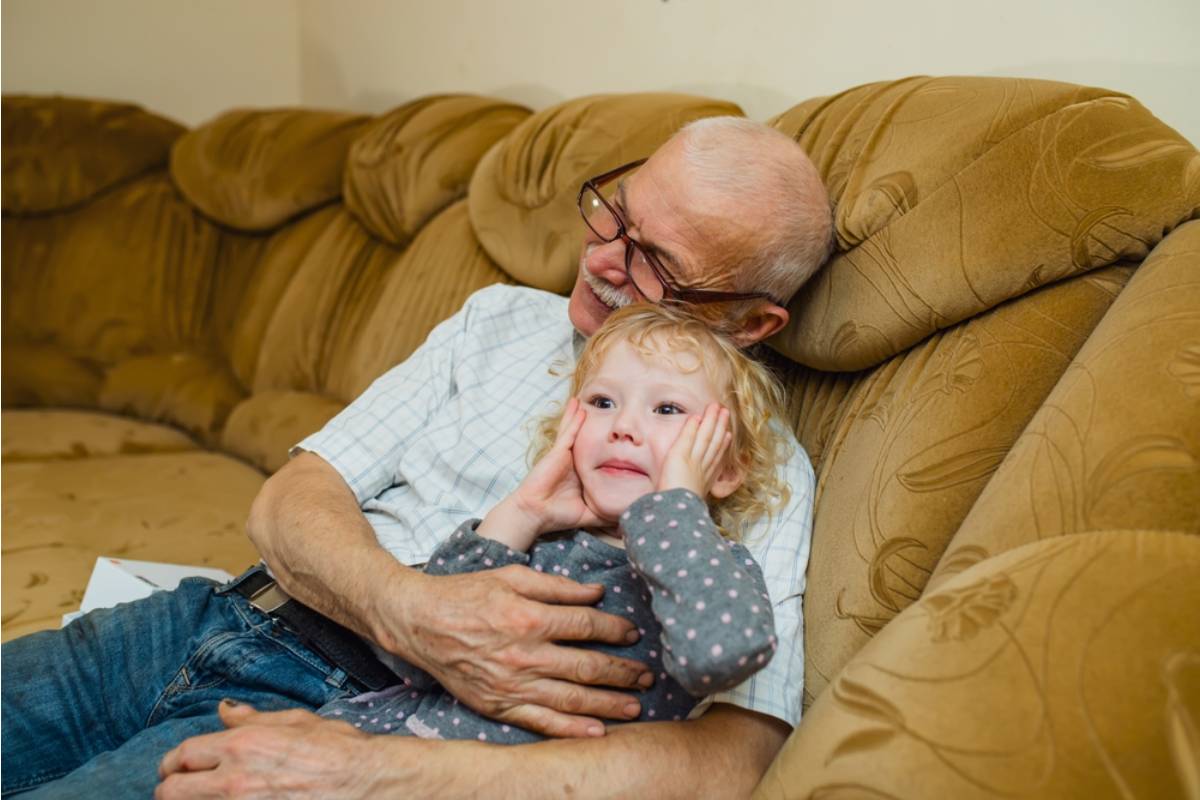
Her Dad Is 75 While Her Daughter Is Only 2, And She’s Realizing How Different Older Grandparents Can Be

For many parents who have children later in life, the grandparents are already in their 70s or even 80s by the time the kids are toddlers. That can create a very different family dynamic from the one many people grew up with, especially if their own grandparents were young enough to babysit, drive them places, take them on vacations, or spend entire weekends together.
One parent described having a 75-year-old father and a 2-year-old daughter, with the added difficulty of having no other living grandparent on that side of the family. The question wasn’t about regretting having a child later. It was about figuring out how to handle the reality that an older grandparent may not be able to provide the same physical or practical support that younger grandparents sometimes can.
The biggest difference is often the amount of help grandparents can provide
A common theme in the discussion was that older grandparents can still be loving and involved without being able to function as regular childcare.
Toddlers require constant supervision, quick reactions, lifting, carrying and sometimes physically chasing them around. A grandparent who is perfectly capable of spending an afternoon reading books or playing games may not be able to safely handle a toddler at a playground or near a busy street.
That doesn’t necessarily make the relationship less meaningful. It simply changes what grandparents can realistically contribute.
Some grandparents are surprisingly active well into their 70s
Age alone doesn’t tell the whole story.
Several parents described grandparents in their 70s who still hike, swim, bike, play sports and get down on the floor with their grandchildren. One person said their parents were in their mid-70s and still watched their two young children twice a week.
Another commenter described a 79-year-old mother who could still care for her grandchildren without much trouble. The point was simple: two people who are the same age can have dramatically different physical abilities.
That makes it difficult to create a universal rule about when a grandparent is “too old” to help.
Health matters more than the number on the birth certificate
A 70-year-old who exercises regularly and has good balance may be more capable than a 60-year-old dealing with serious mobility problems.
Parents in the discussion repeatedly emphasized looking at the individual rather than automatically assuming older means incapable. Some grandparents remained remarkably independent into their 80s and 90s.
At the same time, parents have to be honest about limitations. Love and good intentions don’t automatically make someone physically capable of handling a fast-moving toddler.
Sometimes grandparents genuinely overestimate what they can do
One of the harder situations comes when grandparents insist they are capable of childcare when the parents know otherwise.
One commenter described grandparents who couldn’t stand unassisted but still wanted to provide solo care for a baby and toddler. Another parent explained that their mother had back problems and poor hearing but still believed she could safely take two young children to a park near a busy road.
Those conversations can become incredibly uncomfortable because the parent isn’t trying to reject the grandparent. They’re trying to protect both the children and the grandparent.
A fall can change the entire arrangement
One parent shared a particularly frightening example involving a 78-year-old grandmother who was already frail.
While helping after the birth of a second child, the grandmother fell while trying to pick the baby up from a changing area. She broke her arm, although thankfully the baby wasn’t hurt.
The experience forced the family to reconsider what kind of childcare was actually safe. As the children grew older, the grandmother was eventually able to do more because caring for a six-year-old and four-year-old required much less lifting and physical intervention than caring for an infant.
Grandparent involvement doesn’t have to mean babysitting
Some parents questioned the idea that grandparents need to provide childcare in order to be considered “active.”
A grandparent can read stories, have lunch with the kids, attend school events, play board games, take short walks or simply sit and talk with them. Those activities may not give the parents a free weekend, but they can still create a meaningful relationship.
For a toddler, having a grandparent who regularly sits on the floor and reads the same book for the hundredth time can be just as memorable as a grandparent taking them on elaborate adventures.
Some families build their own support network
Parents who can’t depend on grandparents often find other ways to create a support system.
One commenter said their family had essentially built a “village” out of friends rather than relying on relatives. Another described creating a foundation of close family friends for children who had no living grandparents at all.
That can require more planning, but it also takes some pressure off grandparents who simply aren’t physically capable of providing regular childcare.
Older grandparents can still create incredibly strong bonds
The discussion included several examples of children having exceptionally close relationships with elderly grandparents.
One person remembered spending much of their childhood with a grandfather who was already in his 70s. Those years became some of the happiest memories of their childhood, despite the grandfather being far older than most parents’ ideas of an energetic grandparent.
Another commenter said their child plays chess with a 90-year-old great-grandfather.
The relationship doesn’t have to revolve around running around outside. Older grandparents often have stories, hobbies, knowledge and patience that children can connect with in completely different ways.
Sometimes the hardest part is knowing time may be limited
This was one of the most emotional concerns raised by parents.
When a child has grandparents in their 70s or 80s, parents naturally become more aware that the grandparent may not be around for every milestone. A toddler may not remember much about a grandparent who dies when they’re young.
One parent described losing their father when he was almost 81 and said they now keep him alive for their children through stories and photographs.
That can be painful, but it also encourages some families to make the most of the time they actually have.
Younger grandparents aren’t guaranteed to be more involved
There was also an important reminder that having younger grandparents doesn’t automatically mean having more support.
Some grandparents in their 50s and 60s are still working full time, traveling, pursuing hobbies or simply don’t want to provide regular childcare. Others may live far away or have their own health problems.
Meanwhile, some grandparents in their 70s are incredibly involved.
Age can influence what someone is capable of doing, but interest, health, distance and personality matter just as much.
Sometimes grandparents become the people who need help
There is another side of having children later: the possibility of caring for aging parents while raising young children.
Several commenters described being caught between two generations, sometimes called the “sandwich generation.” Instead of asking grandparents to watch the kids, the adult child may increasingly find themselves helping the grandparents with appointments, transportation, paperwork or other responsibilities.
That can make an already demanding stage of parenting even more complicated.
Parents shouldn’t build their childcare plan around grandparents
Perhaps the most practical advice throughout the discussion was not to treat grandparents as guaranteed childcare.
One parent put it bluntly: grandparents aren’t an entitlement or a childcare service. If they are willing and able to help, that’s wonderful, but parents shouldn’t make decisions assuming that help will always be available.
That mindset can prevent a lot of resentment. Instead of expecting a grandparent to fill a specific role, families can figure out what that grandparent is actually capable of doing and build the rest of their support system around it.
The relationship can change as the children grow
An older grandparent who can’t safely carry a baby might have no trouble spending several hours with a school-age child.
As children become more independent, grandparents may suddenly be able to participate in activities that weren’t possible during the toddler years. Reading, crafts, games, movies, conversations and short outings can become much easier.
In some families, the grandparent’s role naturally evolves rather than disappearing.
Sometimes you simply have to appreciate the time you have
There’s no perfect age for becoming a parent or becoming a grandparent.
Some children grow up with grandparents who are young, energetic and able to take them everywhere. Others have grandparents who are elderly, live far away or aren’t able to participate much. Some children lose grandparents very young, while others are lucky enough to know great-grandparents well into adulthood.
The important thing isn’t necessarily how physically active a grandparent can be. It’s whether the child gets the opportunity to know them, love them and make memories with them while they’re here.
And for many families, that’s more than enough.