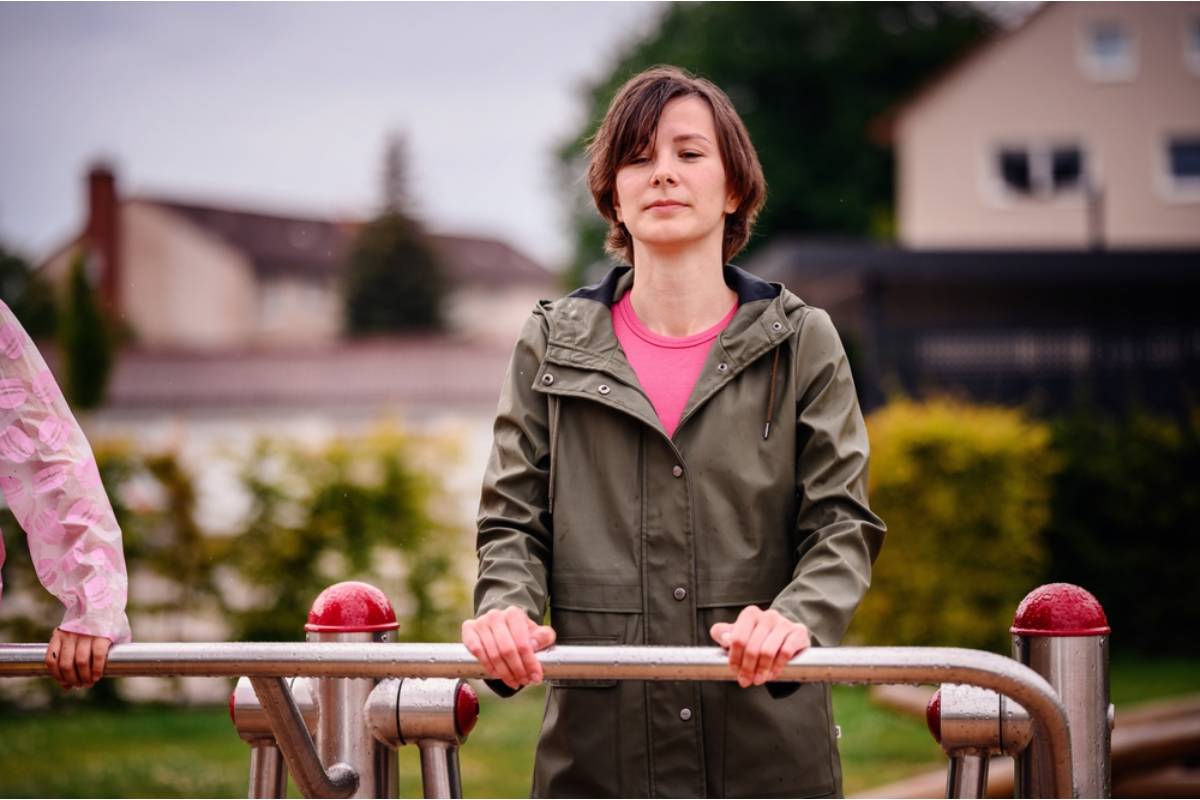
Mom Lost Her 3-Year-Old at the Playground and Couldn’t Believe Everyone Just Watched

The morning had been completely ordinary. A mother had taken her baby and three-year-old to the local playground for some time outside, and they were getting ready to head home when everything suddenly changed.
Her three-year-old had left a toy on a bench, so she briefly walked back to grab it. When she turned around again, her daughter was nowhere in sight.
She Assumed Her Daughter Had to Be Nearby
At first, there was no reason to panic. The playground was gated, and there was a small community building nearby, so she figured her daughter couldn’t have gotten very far.
She started looking around the playground and calling her daughter’s name normally. When there was no answer, she began calling louder, expecting the little girl to pop out from behind some equipment or respond from somewhere nearby.
The Minutes Started Feeling Much Longer
The longer she searched, the more frightened she became. She called her daughter’s name again and again, eventually raising her voice enough that she became hoarse.
She said she called the child’s name more than 30 times. Still, there was no response, and the possibility that something had actually happened began taking over her thoughts.
She Finally Told People Her Daughter Was Missing
Eventually, she started telling people nearby that she couldn’t find her daughter. She was visibly panicking and desperately trying to search every possible hiding spot.
What shocked her most was that the other parents didn’t seem to react. She looked around and saw people sitting there, many of them focused on their phones, while she was frantically searching for her three-year-old.
Then a Tiny Voice Finally Answered
Just when she was approaching the point of completely losing it, she suddenly heard her daughter’s voice.
“I am here!”
The little girl had apparently been nearby the entire time and hadn’t responded to all of the calls. The mother immediately felt an enormous wave of relief, followed by the realization that her daughter was safe.
She Had One Important Conversation With Her Daughter
Once she had her daughter back beside her, she explained that she needed to answer whenever her mother called her name.
For a three-year-old, the seriousness of the situation probably wasn’t obvious. To the child, it may simply have felt like another game or an opportunity to stay quiet, but her mother had just experienced several terrifying minutes.
The Relief Was Followed by Frustration
After making sure her daughter was okay, the mother couldn’t stop thinking about everyone else who had been nearby.
She understood that she was ultimately responsible for watching her own children. What bothered her was that she had been visibly searching and calling for her daughter, yet seemingly nobody had stopped to ask whether she needed help.
Other Parents Might Not Have Known What Was Happening
One explanation offered by other parents was that simply shouting a child’s name doesn’t necessarily tell strangers that the child is actually missing.
A parent hearing someone yell “Emily!” across a playground might assume the child is playing somewhere nearby or simply ignoring their parent. They may not realize they’re witnessing an actual emergency.
Giving a Description Can Change Everything
One of the most useful suggestions was to shout a physical description instead of only calling the child’s name.
Rather than repeatedly yelling a name, a parent could shout something like, “I’m looking for my three-year-old daughter, blonde hair, pink shirt and blue shorts!” Suddenly, everyone nearby has something specific to watch for.
Specific Instructions Can Get People Moving
Another important lesson was to directly assign people tasks instead of hoping someone will volunteer.
Pointing at a particular person and saying, “You in the blue shirt, please check by the gate,” gives that person a clear responsibility. Asking another person to check the community building or playground equipment can quickly turn a confused crowd into an organized search.
There Is a Reason People Sometimes Freeze
Several parents pointed out that people don’t necessarily ignore emergencies because they don’t care.
When something unexpected happens in a crowded place, people can freeze because they don’t know whether they are supposed to intervene. Everyone may also assume somebody else is already handling the situation, creating a strange situation where dozens of people are present but nobody takes the first step.
A Gated Playground Can Create a False Sense of Security
The fact that the playground was enclosed may also have affected how the other parents interpreted the situation.
If they assumed the child couldn’t leave the playground, they may have believed the mother would find her within seconds. That doesn’t make the mother’s fear any less real, but it could explain why the people around her didn’t immediately react as though a child had disappeared.
Parents Have Different Experiences With This
Some parents admitted they had experienced nearly identical situations. Toddlers can disappear behind playground equipment, clothing racks, trees, cars or other people in seconds.
One parent recalled losing a two-year-old in a store, only for the entire staff and security team to begin searching. Another remembered a child disappearing at a playground and several adults immediately forming a search party.
The Beach Is a Completely Different Situation
Several parents said they would react particularly quickly if a child disappeared near water.
A playground might have gates and relatively contained areas, but a crowded beach, lake or pool introduces much more immediate danger. Losing sight of a toddler near water can turn a brief moment of confusion into a potentially life-threatening emergency.
One Parent Remembered Being on the Other Side
Another parent described finding a terrified toddler who had wandered away from his mother. The child was running toward a busy parking lot while several adults nearby appeared to do nothing.
The parent intervened, stopped the child from reaching the parking area and eventually helped reunite him with his mother. The experience left her stunned that so many adults had watched without stepping forward.
Phone Distraction Became Part of the Conversation
The original mother couldn’t help wondering whether phones had played a role in what she witnessed.
Seeing parents looking down at screens while someone nearby desperately searched for a child made the situation feel even more unsettling to her. Even if those people didn’t understand exactly what was happening, she wished at least one of them had looked up and asked whether she needed help.
Some Parents Said They Would Always Get Involved
Other parents said they couldn’t imagine watching someone search for a missing child without doing something.
For them, helping would be automatic. They would either start scanning the playground, ask for a description, watch the exits or get another adult involved.
The Experience Left Her With a Different Lesson
The frightening experience ultimately taught the mother something she hadn’t expected to learn.
She had always assumed that if she ever needed help finding her child, the other parents around her would naturally jump in. Now she knows that she may need to clearly announce that her child is missing and give people specific information if she wants the fastest possible response.
Her Daughter Was Safe, and That Was What Mattered
In the end, the little girl was safe, and the frightening search ended without anything happening to her.
But the experience stayed with her because of how quickly an ordinary playground visit had turned into a parent’s worst few minutes. She had expected the other adults to recognize the panic on her face and instinctively help, but instead she felt as though she was searching alone in a crowd.
A Scary Moment Became a Lesson for Other Parents
The biggest takeaway wasn’t necessarily that other parents were uncaring. It was that people don’t always recognize an emergency unless they’re given clear information about what is happening.
Calling out a child’s name may not be enough. Saying the child is missing, describing exactly what they’re wearing and directly asking specific people to help can make the difference between a confused crowd and a coordinated search.
For this mother, though, the most important part was simple: after several terrifying minutes, her daughter finally answered, and she was able to hold her close again.