A Pennsylvania Homecoming King Was Handed His Crown at a Pep Rally, Then Walked Over to the Other Finalist

While two finalists waited at a homecoming pep rally in Mahanoy City, Pennsylvania, Keny Cedanio Ramirez put an arm around Axton Kuhla. Then Keny’s name was called as homecoming king, a sash and crown were handed to him, and he walked over to Axton and placed them on his classmate instead of keeping them, according to Local 12 in Cincinnati.
So the answer to what he did next is simple: he gave his crown and sash to Axton Kuhla, the other finalist. The audience cheered, and Axton wiped away tears. A video of the moment, recorded by Dawn Bowers, spread widely online in the days that followed, and it was picked up by news outlets in Ohio and Florida.
An Arm Around a Classmate Before the Crown
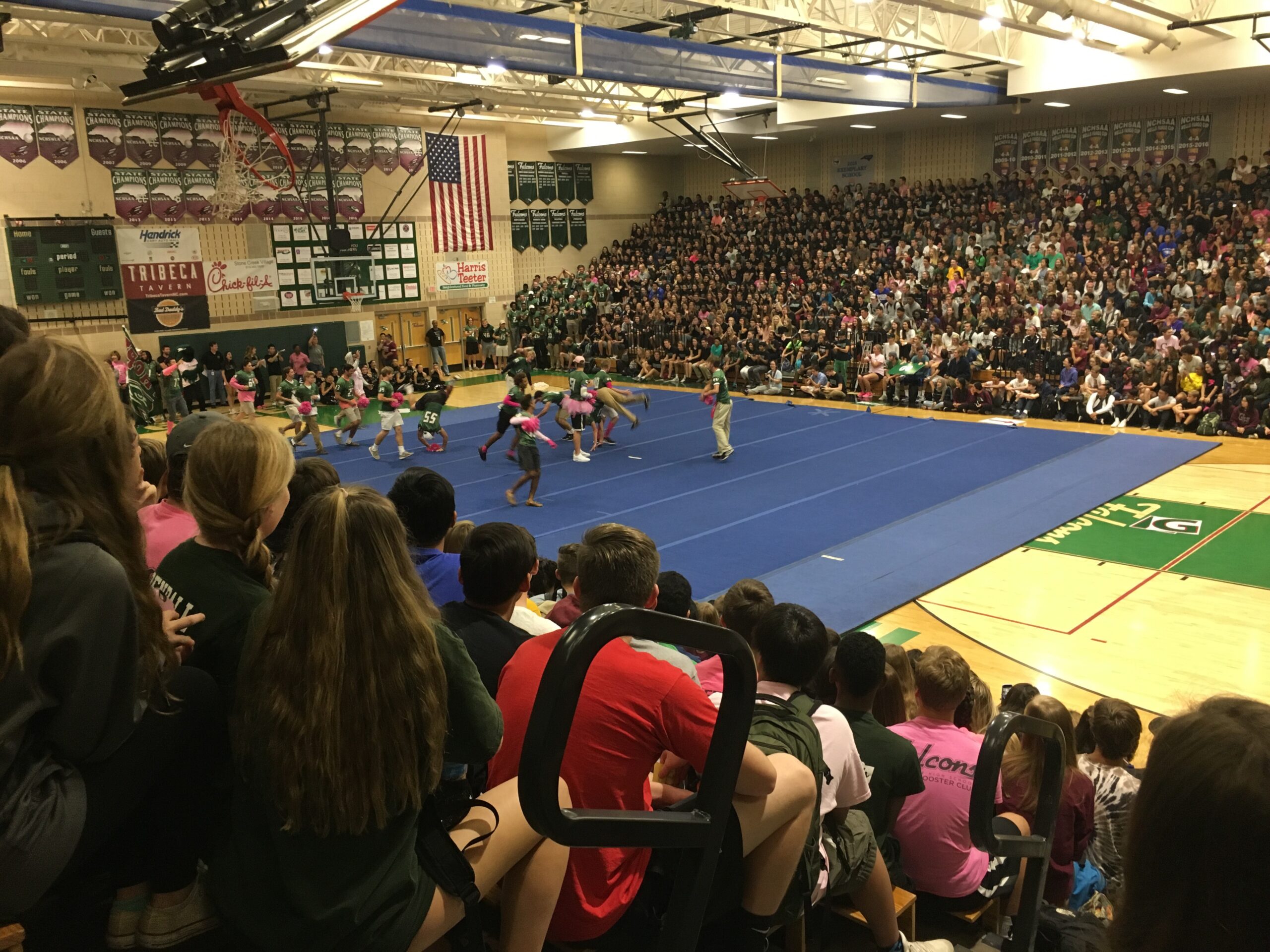
The setting was a districtwide homecoming pep rally at Mahanoy Area Junior-Senior High School on a Friday, according to a report from Nexstar’s WFLA in Tampa that was republished by AOL and updated on Oct. 19, 2026. Local 12’s report was published a day earlier, on Sunday, Oct. 18, which places the rally on Friday, Oct. 16.
Two finalists stood waiting for the announcement: Keny and Axton. WFLA reported that while the two waited for the result, Keny put his arm around Axton. In the clip, the two stand together as the winner’s name is about to be read. Local 12’s account begins at the same point, with the two finalists announced and the room waiting to hear which of them had won.
When the result came, Keny was announced as homecoming king and received the sash and crown. WFLA said that moments later he walked over to Axton and placed the sash and crown on him. The report described the audience as erupting as Axton wiped away tears.
FaithPot, a faith-oriented news and inspiration site, described the same sequence in a post dated Oct. 20, 2026. Its account matches the others on the key points: the two final candidates were Keny and Axton, school officials gave Keny the sash and crown, and he handed both to the runner-up. FaithPot also noted that Axton has Down syndrome.
What the Reports Do and Do Not Say About the Moment
The coverage is short, and it helps to be plain about what it contains. None of the three reports quotes Keny, Axton, their families or anyone from the school district. They do not say why Keny made the choice, and they do not say what Axton or his family thought of it afterward. They do not give the students’ ages or grades.
What the reports do establish is the order of events on the video: an arm around a classmate, a name announced, a crown and sash received, and then a short walk to the other finalist. That sequence is the same in every account reviewed, which is why the story holds together even without a statement from the school.
Local 12 also reported that the video was distributed through Storyful and CBS Newspath, two services that distribute video to news organizations. That explains how a recording from a school pep rally ended up on television stations and news sites in Ohio and Florida within days of the event.
Reports spelled the finalists’ names differently in places, including one that gave Axton’s surname as Kuhl. This story uses the spellings in the Local 12 and FaithPot reports, which agree with one another.
Stories about moments like this can turn a classmate into a symbol. The more accurate description is smaller and more concrete. A student who won a school title chose, in front of the district’s students, to hand the crown and sash to another finalist, and the finalist’s reaction was the one the video captured: tears, and a crowd that cheered.
Down Syndrome and the Language Families and Schools Use
Because the reports identify Axton as a student with Down syndrome, background from health and advocacy groups helps readers describe it accurately. The Centers for Disease Control and Prevention says Down syndrome is a genetic condition in which a person has an extra copy of chromosome 21. The agency says roughly 5,775 babies born in the United States each year have it, making it the most common chromosomal condition diagnosed in the country.
The CDC also says children with Down syndrome often reach developmental milestones such as speaking more slowly, and that people with the condition can live healthy, happy lives with supportive care. Those points describe a group of people, not any one student, and nothing in the coverage of this rally says more about Axton than that he has Down syndrome and was a finalist.
The National Down Syndrome Society offers guidance on how to write about people with the condition. It says people with Down syndrome should always be referred to as people first, with phrasing such as “a child with Down syndrome” rather than “a Down syndrome child.” It also says a person has the condition rather than suffering from it, and that the name is written “Down syndrome,” without an apostrophe and an “s.” It suggests “typically developing” rather than “normal” when describing peers, and it describes the condition as a syndrome, not a disease. The society puts the birth rate at about 1 in 775 babies as of 2018.
The society adds that people with Down syndrome are increasingly part of community life, including schools. At Mahanoy Area’s pep rally, two finalists stood together, and the winner chose to hand his crown and sash to the other.
Get stories like this by email. Sign up for The Parent Diaries Letter.
This article was produced with AI assistance and edited for accuracy against the sources linked above.
Image: TheBlueRutabaga – CC BY-SA 4.0/Wikimedia Commons