Macey Davis Waited Just 16 Days for a New Heart When Most Children Wait 6 to 12 Months, and Now She Plays Soccer at 4

Families whose children need a new heart are usually braced for a long stretch of waiting, often measured in months spent in a hospital room, watching a phone. Most children on the list wait six to 12 months, according to CBS News Atlanta. Macey Davis waited 16 days. Now 4, she runs, jumps, swims and plays soccer with her younger sister, Josie.
A Diagnosis at 20 Weeks
Lindsey Davis was 20 weeks pregnant when doctors told her that her daughter had hypoplastic left heart syndrome, CBS News Atlanta reporter Monique John wrote. In the condition, the left side of the heart is small and underdeveloped.
The National Library of Medicine’s MedlinePlus describes hypoplastic left heart syndrome, often shortened to HLHS, as a birth defect in which the left side of the heart, including the left ventricle, the mitral and aortic valves and the aorta, does not form fully. It says an untreated baby does not survive. Children’s Healthcare of Atlanta notes that the condition is often found before birth through a fetal echocardiogram, and that it leaves the heart with one working lower pumping chamber instead of two.
The news left Lindsey Davis frightened. She was “really scared” and “cried a lot,” she told CBS News Atlanta.
What the Condition Means for a Newborn
HLHS is rare. Children’s Healthcare of Atlanta cites the Centers for Disease Control and Prevention in estimating that about 1,025 babies are born with it in the United States each year. It is one of the more common heart defects caught on routine prenatal screening, which fits the Davis family learning about it at the 20-week mark.
MedlinePlus says the cause is unknown, as it is for most congenital heart defects, and that no known way to prevent it exists. A baby may look normal at first. Symptoms such as bluish skin, cold hands and feet, lethargy, poor feeding, rapid breathing and a weak pulse can appear within hours or take a few days to show.
The outlook has improved with surgery. MedlinePlus reports that survival after the first surgical stage is more than 75 percent, and that children who survive the first year have a very good chance of long-term survival. It also notes that some doctors consider heart transplantation an alternative to the three-stage approach, though very few donor hearts are available for small infants. That scarcity is why a transplant in a matter of days stands out.
The Davises are not the only family to hear about a heart problem at a routine scan. A 20-week scan in another pregnancy found a heart defect in one twin, and both babies were thriving at 7 months.
Airlifted Hours After Birth
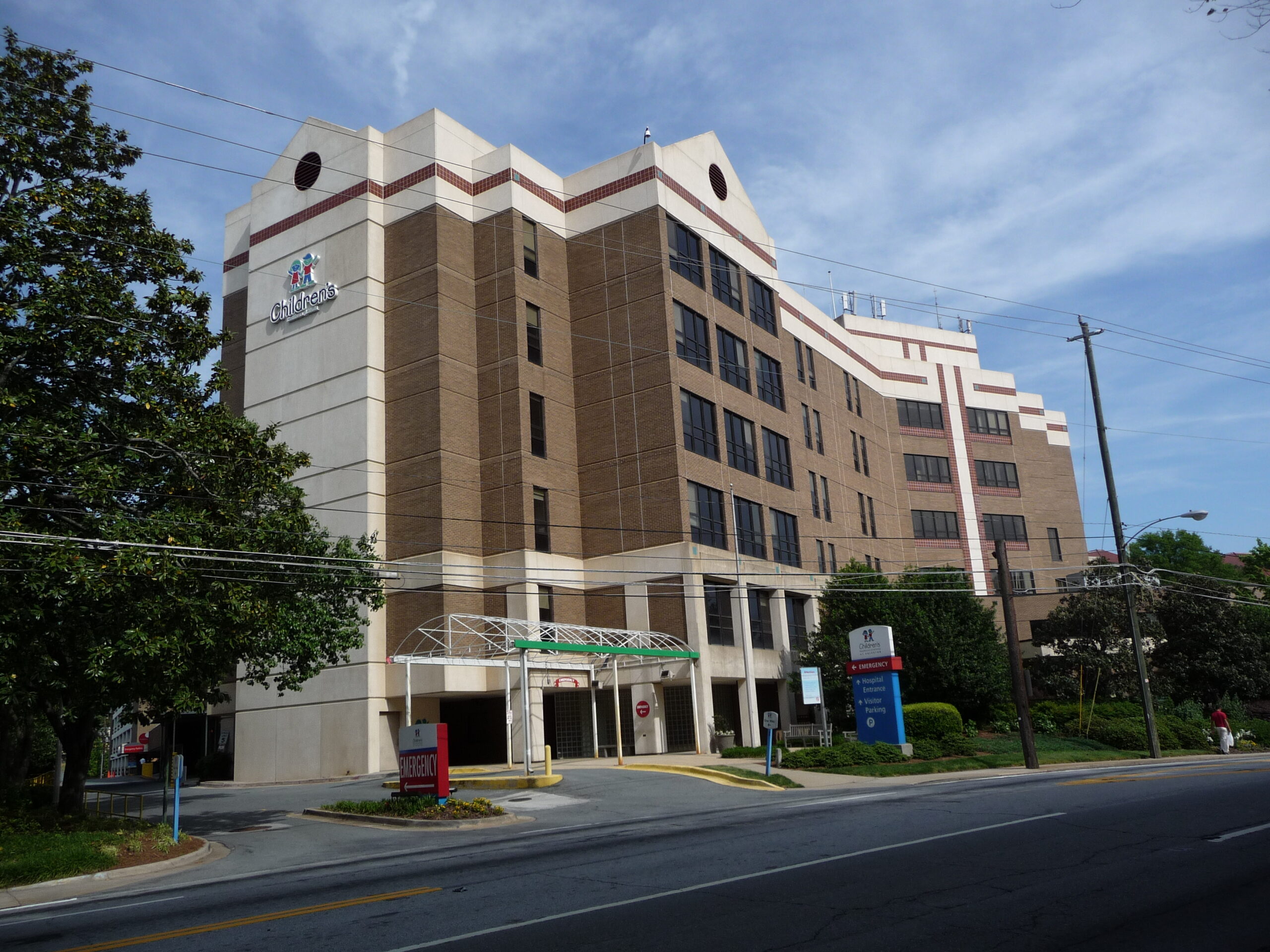
Macey was born in 2022, and within hours she was airlifted from Northside Hospital to Children’s Healthcare of Atlanta, according to the CBS report. The family then spent five months at the hospital’s Egleston location, and they have since returned to the Arthur M. Blank campus for several surgeries.
That early journey matches the usual path for HLHS. MedlinePlus says babies with the condition are admitted to a neonatal intensive care unit and given a medicine called prostaglandin E1, which keeps a blood vessel open so blood can reach the body, while surgery is arranged. The standard treatment is a series of three operations over the first years of life, known as the Norwood, Glenn and Fontan procedures, and Children’s Healthcare of Atlanta says they reroute blood flow so the working right side of the heart supplies the body.
When the First Surgery Did Not Hold
Macey’s care started with a palliative surgery, the kind of staged repair described above. It did not go well. “Her heart unfortunately did not tolerate that procedure very well,” Dr. Chad Mao told CBS News Atlanta.
Doctors recommended a transplant. Mao is the medical director of the Advanced Cardiac Therapies Program at Children’s, and the hospital’s physician profile lists heart transplantation, heart failure and mechanical circulatory support as the focus of his practice. The hospital’s Children’s Heart Center, established in 1988, is among the largest pediatric heart transplant programs in the country, according to its story about its 400th pediatric heart transplant.
Waiting times vary widely. In that same milestone story, another family was first told a wait could last up to a year, and the girl, Rynli, waited more than seven months before the call came. Macey received her new heart after just 16 days. Lindsey Davis said the speed came down to good luck, CBS News Atlanta reported.
The story from the hospital also describes how much can go wrong for a child waiting. Rynli, who was born with dilated cardiomyopathy, had setbacks that included a brain bleed, sepsis and kidney failure before her transplant. Waiting is rarely a quiet stretch, and other babies have spent nearly their whole first months in the hospital too.
A transplant is also not a one-time fix. Children’s Healthcare of Atlanta says transplant recipients take anti-rejection medication for life and need lifelong cardiology follow-up, heart medications and regular testing.
A 4-Year-Old Who Plays Soccer
Today Macey lives the way most 4-year-olds do. She runs, jumps and swims, and she plays soccer alongside Josie, the sister who arrived after her.
For her father, Colin Davis, the sight of the two girls playing matters more than anything else. Watching them play is “just the icing on the cake,” he told CBS News Atlanta, after describing the “so much joy” of watching them play.
The family’s story also shows how long the road is for a child with a heart this fragile. Between the five months at Egleston and the surgeries that followed on the Arthur M. Blank campus, the Davises spent much of Macey’s early life inside a hospital before the soccer and swimming became part of an ordinary week.
Mao described the same feeling from the doctor’s side. He told CBS News Atlanta that seeing transplant patients go back to school and play like other children is the part of the work that brings him joy.
Get stories like this by email. Sign up for The Parent Diaries Letter.
This article was produced with AI assistance and edited for accuracy against the sources linked above.
Image: Daniel Mayer – CC BY-SA 3.0/Wikimedia Commons