Rebecca Michels Was Sure Her Twin Daughters Were Fraternal Until a Nurse Urged a DNA Test, and the Answer Came Back at 16 Billion to One

The odds came back at 16 billion to one: Capri and Kenzie Michels, the twin girls their mother had always assumed were fraternal, are identical. Rebecca Michels, 37, of Sydney, told Newsweek that the DNA result put the chance at 99.999999994 percent.
The twins were born May 28, 2025, about 30 seconds apart. Nurses suggested a DNA test four days later because the girls looked so much alike, and the result arrived in July 2025, three days after the test.
A Scan That Pointed the Other Way
Michels and her husband had reason to believe the girls were fraternal. According to Newsweek, an ultrasound showed the babies in separate sacs with separate placentas, and that led everyone to presume they were not identical.
Sonographers often described the pair as “simply siblings sharing a home.” Michels, who also has a 10-year-old son named Braxton, said the couple had no reason to question that during the pregnancy.
Newsweek noted that separate sacs and placentas do not necessarily rule out identical twins, since some identical pairs develop that way.
Why Separate Placentas Prove Little
Identical twins form when one egg is fertilized by one sperm and the embryo splits within the first two weeks after conception, according to the Washington State Twin Registry. The registry says those twins share 100 percent of their genetic material and are always the same sex. Fraternal twins come from two eggs, each fertilized by a different sperm, and share about half their genetic material, like any pair of siblings.
The placenta count is a poor test. Twins Research Australia says roughly one-third of identical twins have separate placentas, just as fraternal twins always do, so a pair with two placentas can still be identical. For same-sex twins, the organization says, only a DNA zygosity test can confirm whether they are identical or fraternal.
A paper on zygosity knowledge hosted by the University of Melbourne reports the same one-third figure for identical pairs with separate placentas. It adds that almost one in six parents in its study reported being misinformed about their twins’ zygosity during pregnancy.
The Swab, the Wait and the Result
Michels told Newsweek that seeing how alike the girls looked made the couple curious, which is why they took the nurses’ suggestion. The test was done in July 2025, and the answer came three days later. Newsweek did not name the testing company.
The result gave a 99.999999994 percent probability that Capri and Kenzie are identical, and said they are 16 billion times more likely to be identical than fraternal. Michels described the outcome as “a lovely ending to all the surprises.”
Reading a 16-Billion-to-One Result
A figure like that is a probability, not a measure of how alike the girls look. One Australian provider, Identilab, explains on its site that identical twins’ DNA profiles will be the same and fraternal twins’ will differ. It says its report lists each DNA marker for each twin, plus a probability statement, and gives an example of twins about 20 billion times more likely to be identical than fraternal, or 99.99999995 percent. That provider is not named in Newsweek’s report, and the example is only an illustration of how such results are written.
The University of Melbourne-hosted paper describes the gold standard as a test of 12 to 15 markers, with a pair concluded to be identical when all markers match.
Why Parents Test Their Twins
Twins Research Australia says knowing zygosity can matter for health and for family life. It lists bonding between twins, assessing disease risk, tissue compatibility for organ transplants, legal and educational matters, and the chance of the mother or close relatives having more twins. In one of its studies, about one-third of twin participants and one-third of parents were unsure of or wrong about the twins’ zygosity before DNA testing.
The University of Melbourne-hosted paper adds that accurate zygosity matters for perinatal health, personal identity and peace of mind, and that most participants who learned their true zygosity reported positive emotions.
Twins are not rare. The National Center for Health Statistics reported in its Health E-Stat 117 that the U.S. twin birth rate fell from 33.9 to 30.1 per 1,000 births between 2014 and 2024.
For the Michels family, the answer settled a question that had been open since the girls’ first days. Capri and Kenzie are identical, and their mother says the news fit with the surprises that came before it.
Get stories like this by email. Sign up for The Parent Diaries Letter.
This article was produced with AI assistance and edited for accuracy against the sources linked above.
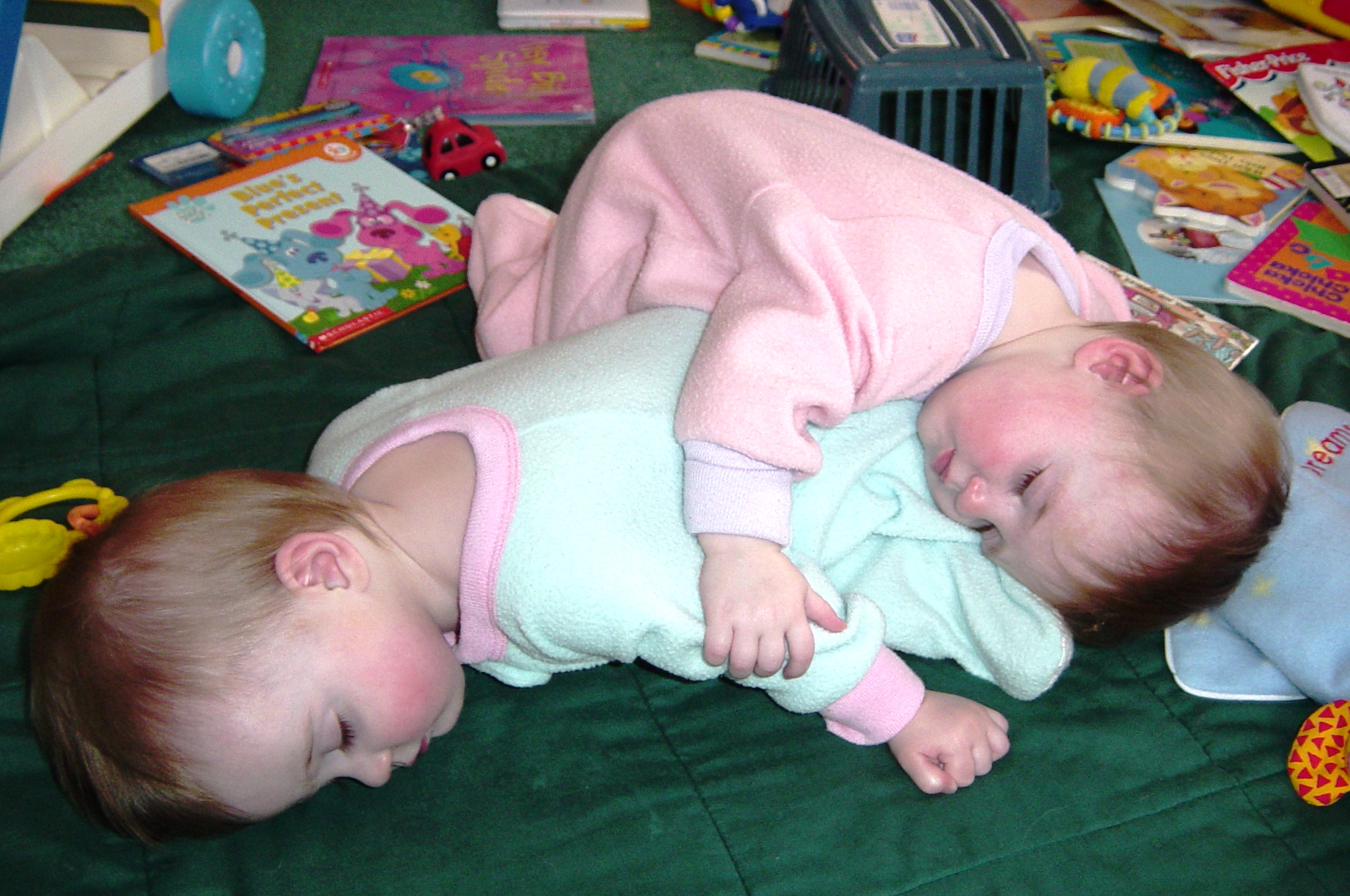
Image: Photo by and ©2006 Dustin M. Ramsey (Kralizec!) – CC BY-SA 2.5/Wikimedia Commons. Stock photo, not the Michels family.