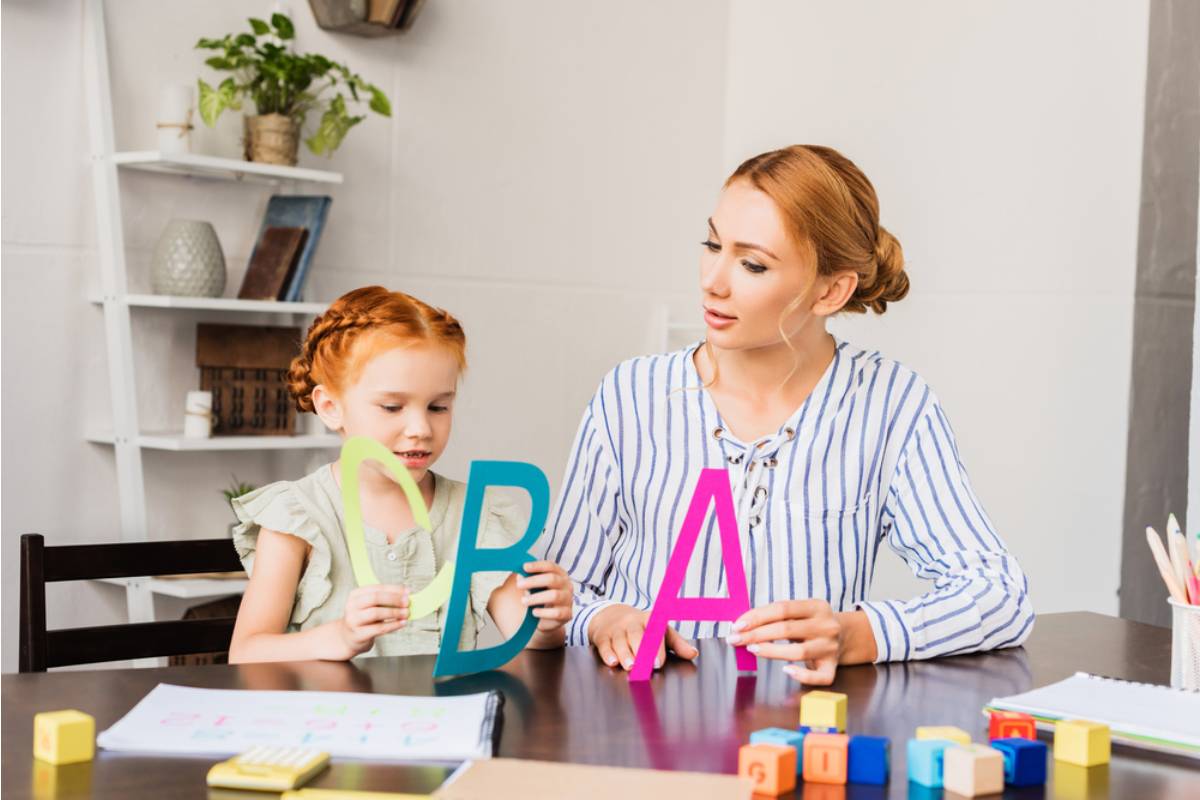
Mom Realizes Her 5-Year-Old Is Crying Over Letters for a Reason After 40-Minute Workbook Battle

A parent was trying to prepare her nearly 5-year-old daughter for kindergarten after the child missed the local school cutoff by just a week. Because she would be one of the oldest children in her eventual class, the parent became increasingly anxious that her daughter might fall behind academically.
The parent had started using two workbooks every night, one for numbers and one for letters. The exercises involved tracing, writing, and identifying letter sounds, but the sessions quickly became stressful. When the little girl didn’t know an answer, she would become upset and say she couldn’t do it, while her mother became frustrated by the crying and resistance.
After one evening took 40 minutes just to finish two workbook pages, the parent realized the approach was probably creating more anxiety than learning. She turned to other parents for advice about what a nearly 5-year-old actually needs to know and whether she should abandon the worksheets.
Missing Kindergarten Created Anxiety Before School Even Started
The parent explained that her daughter was turning 5 in a month but would miss kindergarten because her birthday fell just after the cutoff date. She also hadn’t been accepted into any of the public preschools nearby.
That combination made the parent worry that her daughter would enter school older than the other children while somehow being less prepared. Getting her into daycare had helped with socialization, but the academic concern remained.
Two Workbooks Every Night Became a Battle
The parent had tried to create a simple routine by having her daughter complete one page from a numbers workbook and one from an alphabet workbook every night.
The pages required tracing numbers and letters, writing them independently, and learning the sounds associated with different letters. On paper, it seemed like a reasonable way to prepare for kindergarten.
In practice, however, the lessons quickly turned into arguments and tears.
A Wrong Answer Could Bring Everything to a Halt
Whenever the girl didn’t know something, she became upset almost immediately. Her mother would try to explain that she could figure it out, but the child’s frustration only increased.
The mother eventually became frustrated too, particularly because she felt the crying was preventing them from actually completing the lesson. She tried explaining that becoming upset would only make the work take longer, but that didn’t change the situation.
The parent also realized that her daughter interpreted her frustration differently than she intended.
The child believed her mother was angry because she had gotten something wrong, even though the mother felt frustrated by the emotional reaction rather than the mistake itself.
One Comment Told Her to Put the Worksheets Away
One of the most highly upvoted responses was blunt: skip the worksheets and read to her constantly.
The commenter suggested regular trips to the library, letting the child choose books, and spending plenty of time outdoors. They also recommended running, swinging, throwing, catching, climbing, swimming, and other physical activities.
The argument was that these experiences aren’t separate from school preparation. They help develop physical coordination, language, attention, and other abilities that children eventually rely on in the classroom.
Parents Suggested Turning Letters Into Games
Another parent recommended choosing a “letter of the week” instead of sitting down for formal lessons.
If the letter were B, for example, the family could look for things beginning with the B sound, read books containing lots of B words, play with balls, and even bake something together.
The goal would be to make the letter part of everyday life rather than making the child feel like she was sitting an exam.
Numbers Can Be Learned Through Everyday Objects
One teacher explained that young children don’t necessarily need to memorize large sequences of numbers. What’s more important is understanding what numbers actually represent.
Instead of simply asking a child to write the number 2, a parent could put two toys, two pieces of fruit, or two blocks in front of her and connect the written symbol with the quantity.
That turns “2” from an abstract shape into something the child can actually understand.
Reading Together May Matter More Than Perfect Letter Formation
Several commenters emphasized reading aloud as one of the best things the parent could do.
Reading together exposes children to vocabulary, sentence structure, stories, predictions, explanations, and conversations. Those abilities become important parts of literacy later, even though they don’t look like traditional schoolwork.
One commenter who works with children struggling with reading explained that decoding letters is only one part of becoming a strong reader. Comprehension, vocabulary, reasoning, and remembering what came before are also critical.
Physical Play Can Help Prepare a Child for Writing
Some parents pointed out that writing isn’t simply a matter of knowing what a letter looks like.
Young children need to develop the physical abilities required to control pencils and other tools. Painting, playing with Play-Doh, building with LEGO, using scissors, doing puzzles, and other activities can strengthen fine-motor skills.
Large movements matter too. Running, climbing, riding a bike, and other physical activities help children develop coordination and body awareness.
One Parent Turned the Alphabet Into a Floor Game
One parent described an especially simple approach that worked with her son.
She wrote all 26 letters on separate sheets of paper and placed them around the floor. Then she called out a letter and had him physically jump onto it.
Her child had been read to regularly but wasn’t particularly interested in identifying letters on a page. The movement-based game revealed that he simply learned better when his body was involved.
Another Parent Made Writing an Art Project
A different parent suggested taking writing out of the workbook entirely.
Instead of asking the child to repeatedly copy letters, the parent could draw a huge letter and let the child decorate it with stickers, glitter, paint, or other materials. The child might eventually become curious enough to try writing the letter herself.
Whiteboards, sidewalk chalk, sand, rice, and Play-Doh were also suggested as alternatives to pencil-and-paper exercises.
The important distinction was that the child should experience writing as something enjoyable rather than as a test she can fail.
Her Own Name Could Be the Starting Point
One commenter suggested beginning with the letters that have personal meaning to the child.
A parent could write the child’s name somewhere visible and casually point out the first letter. Later, the child could look for that same letter in books, signs, packaging, and other things encountered during the day.
Once she recognizes the letters in her own name, the parent can gradually introduce letters connected to Mom, Dad, grandparents, pets, favorite characters, or other things she cares about.
Everyday Errands Can Become Mini Lessons
Parents also suggested using normal activities instead of creating separate academic sessions.
At the grocery store, a parent might ask the child to find a particular letter. While walking outside, they could look at house numbers or signs. During cooking, the child could count ingredients or help measure something.
These activities don’t feel like school, but they quietly introduce counting, recognition, vocabulary, sequencing, and problem-solving.
One Parent Said the Child Needed More Play, Not More Pressure
Another commenter believed the mother’s anxiety about her daughter’s preparation was becoming part of the problem.
At nearly 5 years old, the child has plenty of time to develop these skills. Turning every mistake into a stressful lesson could teach her something the parent absolutely doesn’t want her to learn: that academic activities are places where she feels inadequate.
The commenter encouraged the parent to relax, read together, and let the child play and explore.
A Teacher Said There Was Still Plenty of Time
An elementary teacher offered some reassurance that seemed particularly relevant to the parent’s fear of her daughter being behind.
The teacher said there are only 26 letters and that the child has an entire year before kindergarten. Rather than worrying about whether she can already write everything perfectly, the parent should focus on reading, playing, and making letter recognition enjoyable.
The teacher also shared that her own child had shown almost no interest in reading or writing until much later and ultimately turned out perfectly fine.
Another Parent Had a Surprisingly Unusual Reading Breakthrough
One commenter shared a story about a child who showed almost no interest in reading until third grade.
Then the child received a headlamp.
His sibling created a little pillow fort in a closet and filled it with books. The child suddenly became fascinated with reading in his secret little space and eventually spent hours reading.
Years later, that child was an adult who loved books and was described as exceptionally intelligent.
The story wasn’t really about headlamps. It was about discovering the environment or motivation that makes learning feel like something a child wants to do.
The Parent Was Also Dealing With a Major Family Change
Several commenters noticed another important detail in the original post.
The girl had recently started daycare and was no longer spending every other week with her father. Because he lives two hours away, she now sees him on weekends instead.
That is a significant adjustment for a young child. One commenter suggested that some of the girl’s emotional reactions might have less to do with letters and numbers and more to do with everything changing around her.
The Biggest Lesson Was to Stop Treating Mistakes Like Emergencies
The strongest theme throughout the discussion was that there was no need to rush.
The parent clearly wants her daughter to succeed, but the commenters repeatedly pointed out that creating anxiety around learning can be more damaging than entering kindergarten without perfect handwriting or letter recognition.
If the child becomes upset, the lesson can simply end. There is no educational prize for forcing a 5-year-old through another page while everyone is frustrated.
Learning Can Happen Without Looking Like School
The parents responding to the post offered dozens of alternatives: library trips, reading aloud, songs, puzzles, coloring, Play-Doh, outdoor games, counting objects, sidewalk chalk, baking, sensory activities, magnetic letters, and simple scavenger hunts.
None of these requires a child to sit at a table and complete a predetermined number of pages.
The common idea was simple: make learning part of life instead of making life feel like school.
The Parent’s Anxiety May Need to Take a Back Seat
The original poster already recognized that her approach was creating anxiety for both of them.
That self-awareness may ultimately be the most important part of the situation. Her daughter doesn’t need a parent who can force her through every worksheet. She needs someone who can help her associate learning with curiosity, safety, encouragement, and fun.
There will be plenty of time for handwriting practice, phonics lessons, mathematics, and structured schoolwork.
For now, the advice from other parents was remarkably consistent: put away the worksheets when they become a battle, read together, play, explore, talk, move, and let the child discover that learning doesn’t have to mean getting every answer right.