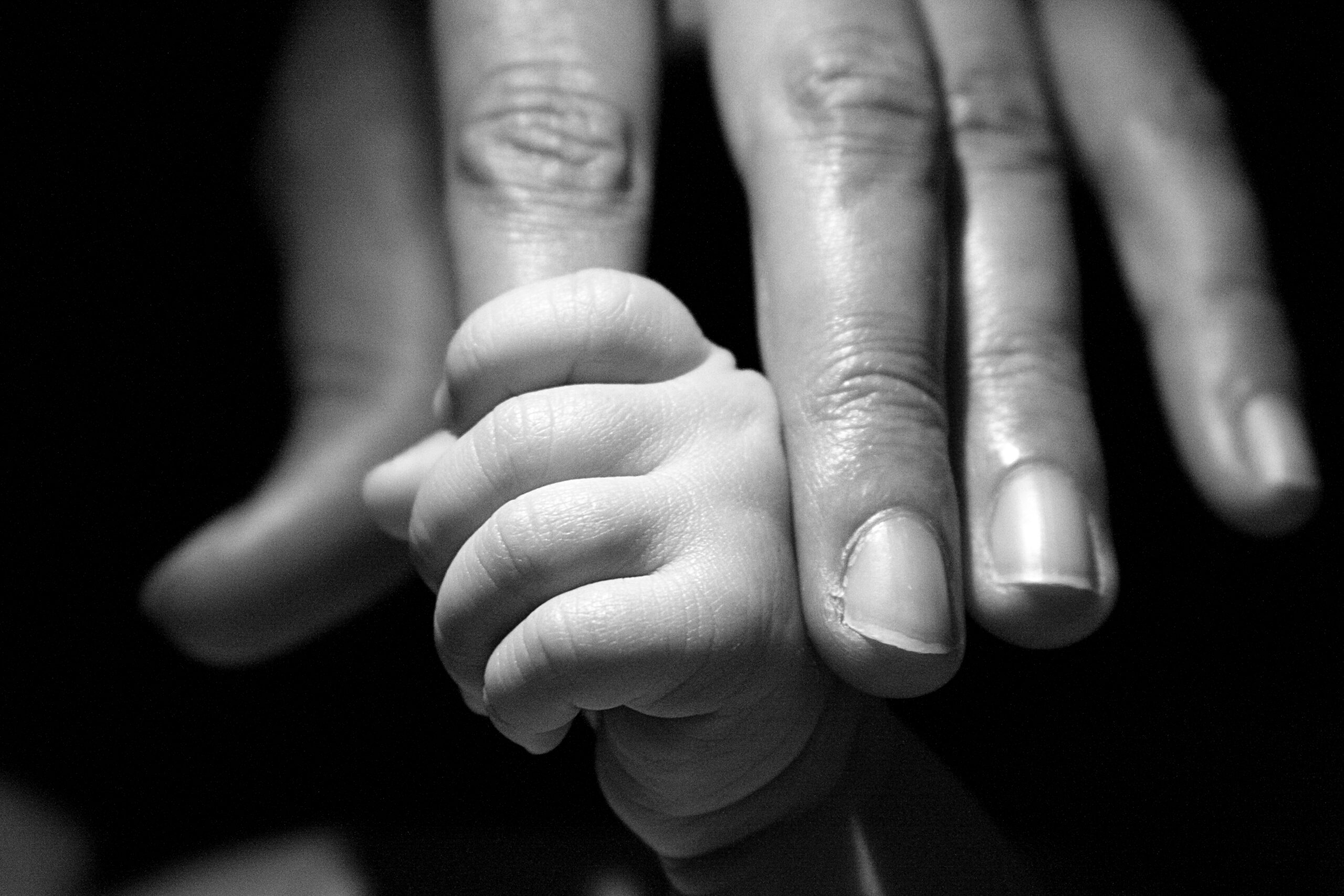
North Carolina Mom Serena Murison’s Prenatal Screen Showed No Concerns, but Her Son Rudy Was Later Diagnosed With a Rare Muscular Dystrophy

Serena Murison, 34, of North Carolina, went through a pregnancy in which nothing showed up on paper. Her ultrasounds looked normal, and a noninvasive prenatal test (NIPT) raised no concerns. Her son Rudy was later diagnosed with LAMA2-related congenital muscular dystrophy, a rare neuromuscular disease, according to a Newsweek report published Oct. 24, 2026.
Murison told the outlet she had sensed that something was different long before any doctor could say what it was. The story is a reminder of what routine prenatal testing is designed to find and what it is not.
A Pregnancy With No Red Flags
Newsweek reports that Murison’s ultrasounds showed nothing abnormal and that her NIPT, a blood screen for certain chromosomal conditions, did not flag any concerns. By every medical measure available during the pregnancy, there was nothing to follow up on.
Murison still felt otherwise. She described to Newsweek a “deep, persistent knowing that something was different,” as published by the outlet. She also described the medical picture at the time: “There were no red flags, nothing abnormal on ultrasounds, nothing anyone could point to medically,” according to Newsweek.
Her advice to other parents, as quoted by Newsweek, was short: “Ask the question; keep paying attention.”
Other families have described a similar gap between a clean scan and a later finding. Parent Diaries has covered one such case, where no scan flagged a problem before Tommy Reyes was born, and another in which a newborn screening found a rare lifelong deficiency in baby Aurora Howell.
What a Prenatal Screen Looks For
A normal NIPT result and a later muscular dystrophy diagnosis are not necessarily in conflict, because the test answers a narrow question. Sutter Health explains that noninvasive prenatal screening is a screening test, which means it tells a parent whether a baby is more likely or less likely to have certain conditions, and that it cannot give a definite answer or diagnosis.
According to Sutter Health’s page on noninvasive prenatal screening, the conditions it covers are sex chromosome differences such as Turner or Klinefelter syndrome, Down syndrome (trisomy 21), trisomy 18 and trisomy 13. The same page says the test does not detect every chromosome condition and cannot detect spina bifida or other physical birth differences. Muscular dystrophy is not among the conditions the page lists.
Newsweek’s description of Murison’s test fits that picture: a screen for certain chromosomal conditions that did not flag anything in her pregnancy.
What LAMA2-Related Muscular Dystrophy Is
The diagnosis in Rudy’s case comes from changes in a gene, not a chromosome count. MedlinePlus Genetics, the National Library of Medicine’s genetics resource, says mutations in the LAMA2 gene cause the condition. The gene provides instructions for part of a protein family, known as laminins, that help stabilize muscle fibers.
MedlinePlus describes a spectrum. In the severe, early-onset form, weakness appears at birth or within the first few months. Infants may have low muscle tone, little spontaneous movement and joint contractures, and facial and throat weakness can cause feeding problems. Chest-muscle weakness can lead to breathing problems and frequent lung infections, and most children with this form do not learn to walk. A milder, later-onset form also exists, and most people with it keep the ability to walk and climb stairs.
The same resource says the condition follows an autosomal recessive pattern, meaning both copies of the gene carry mutations and parents typically carry one copy without showing signs. It estimates the condition affects between 1 in 50,000 and 1 in 400,000 people worldwide, and describes it as thought to be the most common type of congenital muscular dystrophy.
The National Organization for Rare Disorders (NORD) lists the same condition, called MDC1A, in its report on congenital muscular dystrophy. NORD says diagnosis relies on clinical evaluation, history and tests such as muscle biopsy, blood tests and genetic testing, and that no cure exists for congenital muscular dystrophy. Treatment, it says, targets each person’s symptoms and usually involves a team of specialists, with options that include physical and occupational therapy, mobility devices and monitoring of heart and breathing. NORD notes that its report was last updated in May 2013.
The patient group Cure CMD describes the congenital muscular dystrophies as a group of diseases causing muscle weakness at birth, and lists LAMA2, under the names Merosin Deficient and Merosin Negative, among five primary subtypes.
What the Family’s GoFundMe Describes
The family also has a GoFundMe campaign for Rudy, organized by Kylie Jeffrey of Asheville, North Carolina. The page describes his condition as LAMA2 merosin-deficient muscular dystrophy and says he has significant weakness throughout his body and cannot walk or crawl. It says he will likely face worsening feeding and breathing difficulties as he grows.
According to the campaign, his parents, Serena and Sawyer, want to give him the best possible life, but their modest income makes his needs hard to meet. The organizer lists expected costs over the next three years: about $15,000 for a wheelchair-accessible bedroom and bathroom, about $65,000 for a full-size wheelchair van, $5,500 in quoted ramp renovations and $10,000 to $16,000 a year in medical expenses. The page also mentions medical equipment, travel to Cincinnati for care and therapy appointments. The van is the campaign’s main goal.
When reviewed, the page showed $42,535 raised toward a $100,000 goal from 330 donations, with donations currently paused. Newsweek’s article does not mention the fundraiser, and the GoFundMe page does not state Rudy’s age.
What the Account Shows for Other Parents
The facts of Rudy’s case are limited to what Newsweek and the family’s campaign page report: a pregnancy with normal ultrasounds, an NIPT with no concerns, and a diagnosis of a rare genetic muscle disease afterward. Murison’s own message, in the outlet’s words, is to ask the question and keep paying attention.
For families facing a similar search, the reporting from Felix Kennedy’s mother, who started a nonprofit to fund a gene therapy, shows how other parents of children with ultra-rare conditions have organized. Anyone with questions about what a particular prenatal test covers is best directed to a doctor or genetic counselor.
Get stories like this by email. Sign up for The Parent Diaries Letter.
This article was produced with AI assistance and edited for accuracy against the sources linked above.
Image: Rlunaro – CC BY-SA 4.0/Wikimedia Commons