No Scan Flagged a Problem Before Michelle Reyes’s Son Tommy Was Born, Then X-Rays Showed Severe Bilateral Clubfoot and He Was Casted From Thighs to Toes at 6 Days Old

Both of Tommy Reyes’s feet turned sharply inward the moment he was born, and the nurses told his mother he had probably just gotten comfortable in the womb. Michelle Reyes, a mother of three from Buena Park, California, later learned it was severe bilateral clubfoot, a diagnosis nobody had raised during her pregnancy, according to Newsweek.
By the time Tommy was 6 days old, he was in casts that ran from his thighs to his toes. Today, Reyes says, he crawls, swims and is learning to walk.
A Pregnancy With Nothing Flagged
Tommy was Reyes’s third child, and the pregnancy was hard on her body. She told Newsweek she asked for a chair at work because standing for long stretches had become difficult.
Nothing in the prenatal care pointed to a problem with the baby. Reyes said her tests all “came back looking good,” and no scan or doctor flagged anything about his feet.
At birth she noticed both feet were turned in. The nurses’ explanation, that he had settled into a tight position in the womb, was a reasonable one to a mother who had no reason to expect anything else.
The X-Ray That Gave It a Name
A few days after the birth, while Reyes was still recovering in the hospital, a specialist took X-rays of Tommy’s feet. That was when she was told he had severe bilateral clubfoot, she told Newsweek.
Clubfoot is a condition present at birth in which the foot points inward and downward. The Mayo Clinic says it occurs in up to 1 in 1,000 babies, that about half of affected children have it in both feet, and that most affected newborns have no other medical conditions. A multistate study of birth defects surveillance programs, posted by the CDC’s research library, put the prevalence at 1.29 per 1,000 live births, based on 6,139 cases identified from 2001 through 2005.
Reyes had once scrolled past a social media video about a baby with clubfoot. She had never heard of the condition, and her first reaction was to wonder what she had done wrong. Her doctor told her it was not her fault, that babies are sometimes born with clubfoot and that there is rarely a specific cause, Newsweek reported. The Mayo Clinic likewise says the cause is unknown, though genetics and environmental factors may play a role.
Casts From Thighs to Toes
Casting began when Tommy was 6 days old, with a cast on each leg from the thigh down to the toes. Appointments came every two weeks, when the casts were removed and replaced to turn the feet a little closer to their proper position, according to Newsweek.
The approach is known as the Ponseti method. NYU Langone describes weekly visits in which a specialist gently stretches the foot and applies a plaster cast from toes to thigh, with casting usually lasting 4 to 8 weeks. KidsHealth, in a Rady Children’s version of its guide for parents, says most babies wear 5 to 7 casts over a few weeks or months and that casting usually starts when a baby is one or two weeks old.
Tommy had five casts. He then had an Achilles tenotomy, a minor procedure that releases the Achilles tendon to improve foot position and range of motion, and he was put in one final cast.
KidsHealth says most babies need that heel-cord release before the last cast, that the tendon is numbed first, that the cut is small enough to need no stitches, and that it heals while the child wears the final cast for about three weeks.
A Bar, Boots and the First Six Months
Once the casts came off, Tommy moved into special boots joined by a metal bar. For his first six months in them he wore the boots 23 hours a day, Reyes told Newsweek. He has since moved to 14 hours a day, mostly overnight and during naps, and the plan is to reduce that time gradually, depending on his progress.
The bracing is not optional extra time. NYU Langone says relapse is uncommon and that its most frequent cause is not wearing the brace as long as prescribed. KidsHealth explains that the brace keeps the fast growth of the early years from pulling the foot back into its clubfoot position.
For a baby, the routine means a long stretch of life in boots and a bar. Reyes said Tommy is doing well and can do most of what other babies his age can do.
What Doctors Say About the Odds
Newsweek cited the American Academy of Pediatrics as reporting initial correction rates of 90 to 100 percent with the Ponseti method. It also pointed to a study in the Journal of Pediatric Orthopaedics B that followed 137 idiopathic clubfeet for at least two years and found about 93 percent success when the full treatment and bracing protocol was followed.
NYU Langone reports a success rate of greater than 90 percent when treatment starts within the first three weeks of life. The Mayo Clinic says clubfoot does not improve without treatment and that results are better with early treatment, which fits the way Tommy’s care began within his first week. KidsHealth says the method works for most children, letting them walk, run and play without pain, with follow-up visits typically once a year after age 5 until around age 18.
Reyes told Newsweek she wants other families to know that it is fine to feel overwhelmed at first, and that there is “so much hope.” Her son’s path from surprise diagnosis to crawling, swimming and early steps is still in progress, and the gradual cut in boot time will depend on how his feet respond.
Get stories like this by email. Sign up for The Parent Diaries Letter.
This article was produced with AI assistance and edited for accuracy against the sources linked above.
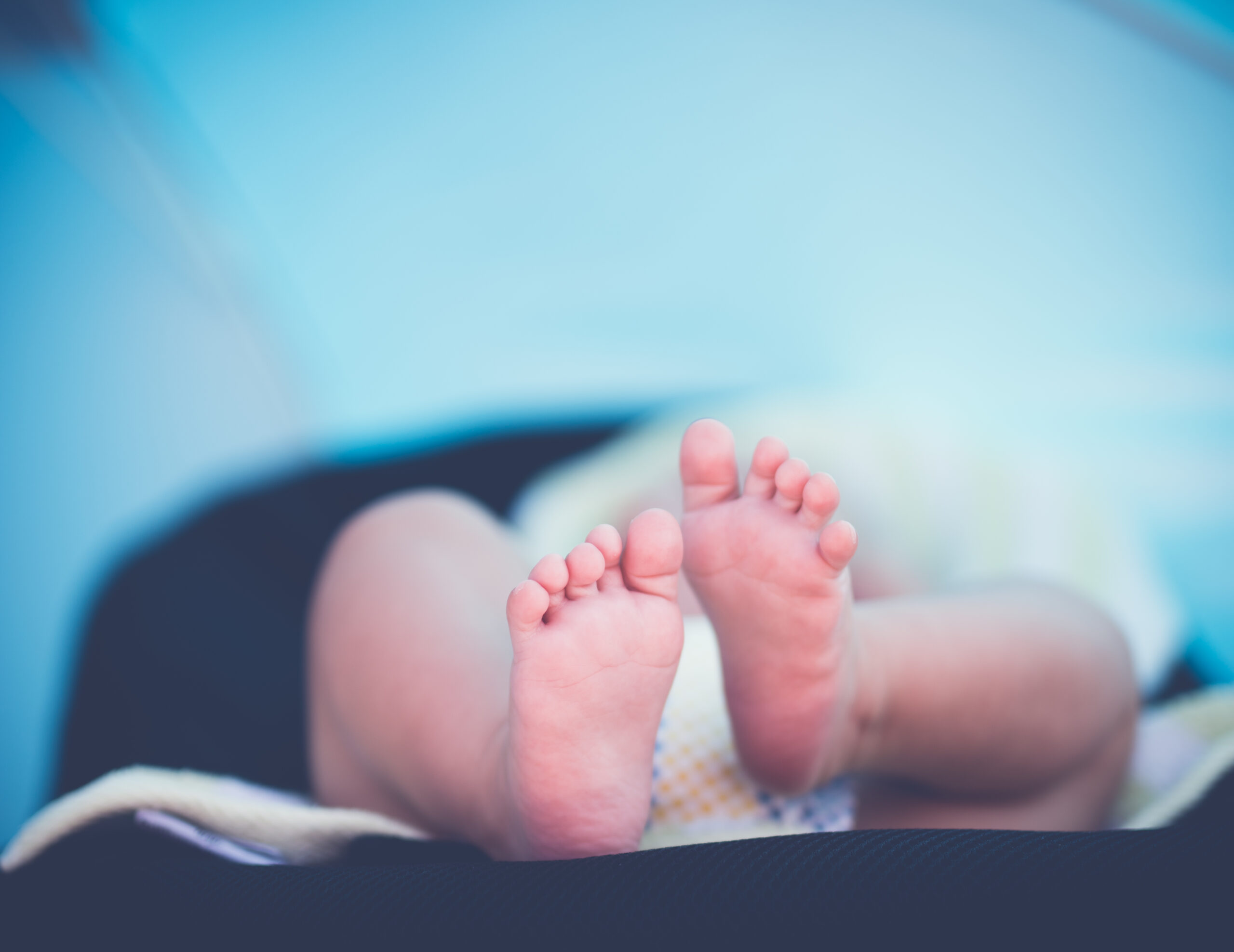
Image: “Newborn baby feet (Unsplash)” by Janko Ferlič thepootphotographer is marked with CC0 1.0 (Wikimedia Commons). Stock photo, not the Reyes family.