Imahri Simington Held Her 2-Pound Son Jhosiah for 8 Hours on His First Day, the First U.S. Mom in a Houston Skincubator Trial

Many U.S. hospitals hesitate to let parents hold a baby born this early, because moving a tiny patient can dislodge breathing tubes and IV lines. Imahri Simington held her son Jhosiah for 8 hours on his first day.
Jhosiah was born in July at 30 weeks, weighing just over 2 pounds. His mother was the first in the country to use a wearable device called the Skincubator in a research trial at Children’s Memorial Hermann Hospital in Houston, according to a Houston Chronicle report published by KETV. He is now home in Cypress, Texas, and weighs more than 9 pounds.
An Emergency C-Section at 30 Weeks
Simington had an emergency C-section in July because of severe preeclampsia, the Chronicle reported. Preeclampsia is high blood pressure with signs of liver or kidney damage that starts after 20 weeks of pregnancy, and MedlinePlus says delivery is required when signs of the condition become severe, including a poor blood supply to the baby or a dangerous rise in blood pressure.
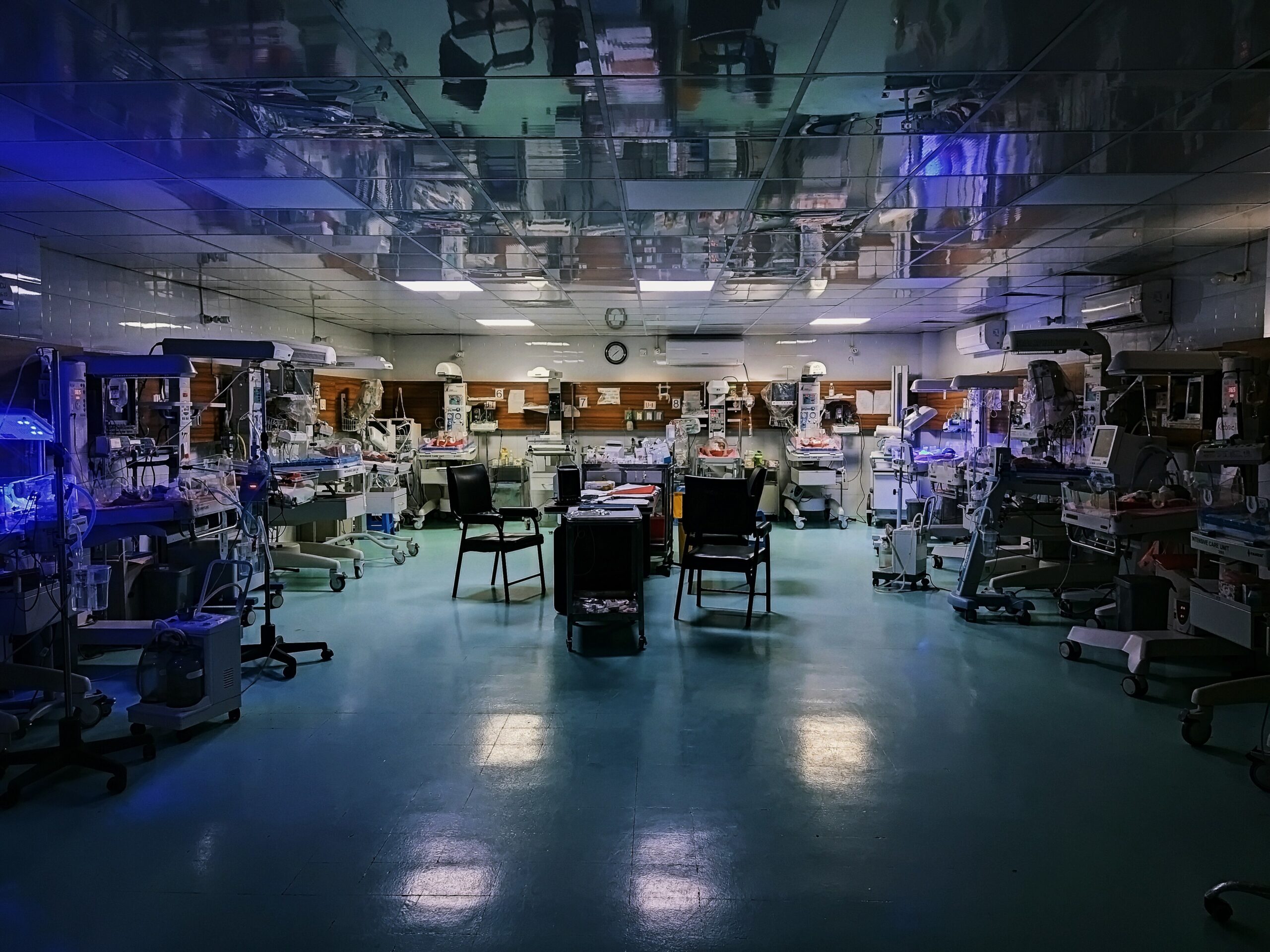
A baby born before 37 weeks counts as premature, according to MedlinePlus. Jhosiah arrived seven weeks before that mark. Babies that early are typically placed in a warmer or incubator and monitored for breathing, heart rate and oxygen levels, and care in the neonatal intensive care unit, or NICU, continues until they can breathe, feed, stay warm and gain weight on their own.
MedlinePlus adds that most babies cannot coordinate sucking and swallowing before about 34 weeks, so feeding tubes are common, and that breathing support can range from extra oxygen to a ventilator. Tubes, lines and monitors like these are what make holding a baby so complicated for NICU staff.
For parents, that usually means a first look through the clear walls of an incubator and a first touch through its small openings. The device Simington tried was built to change that.
What the Skincubator Is
The Skincubator was invented in Israel, the Chronicle reported. It straps to the parent, and the article compares its look to a parachute or jetpack. A premature baby rests against the parent’s skin inside it, and the device is designed only for babies under 4.4 pounds.
Memorial Hermann describes it as a wearable device that lets premature babies on respiratory support rest on a caregiver’s chest for hours at a time. The hospital system says parents can relax, sleep and pump milk while the baby stays there, and that Children’s Memorial Hermann is the first hospital in the United States to bring the device into its NICU.
The reason hospitals care about this kind of contact is well documented. The American Academy of Pediatrics says skin-to-skin care can help with a baby’s warmth, body temperature and heart rate, may steady breathing, can increase time in deep sleep, and promotes bonding. The AAP also notes that these benefits show up with only a few minutes each day. The Chronicle added that skin-to-skin contact can strengthen a newborn’s immune system and reduce parental stress.
Dr. Jaclyn Ruggiero, a neonatologist at the hospital, told the Chronicle that the goal is to help baby and family find each other again.
Eight Hours on Day One, Outgrown in Two Weeks
Simington, who recently completed her nursing degree, held Jhosiah for 8 hours on his first day. Within two weeks, he had outgrown the Skincubator and no longer needed pressurized air, according to the report.
Memorial Hermann’s own page on the device lists what skin-to-skin time is meant to do: help stabilize heart rate and breathing, support growth, ease pain, support sleep and brain development, and help regulate the nervous systems of both baby and mother, and support breastfeeding and bonding. The page says the Skincubator makes transferring these infants from incubator to parent “significantly easier,” and that it is being studied as a way to offer skin-to-skin time much sooner than was previously possible.
Jhosiah went on to leave the hospital and now lives at home in Cypress. “He’s come a long way, but he’s strong like his mom and dad,” Simington said.
Twins, a Father and the Trial Ahead
Simington was not the only parent in the Chronicle’s story. Tiffany Ikwuagwu, an OB-GYN, and Dorian Ojemen, a lawyer, are the parents of twins born after Ikwuagwu’s water broke with one twin at 23 weeks. She spent nearly a month in the hospital, and doctors delivered the twins at 26 weeks after she developed an infection.
Daughter Simone weighed 2 pounds, 6 ounces. Son Silas weighed 1 pound, 10 ounces. For their first 10 days, the babies needed a high-humidity environment, and their parents could touch them only through the incubator. The Chronicle reported that Ojemen was the first father to use the Skincubator to feel his baby’s skin against his chest.
Ikwuagwu described the experience as a journey of emotion, noting that as a doctor she had suddenly become the patient.
The hospital is now preparing a clinical trial to study the device. Phase one focuses on safety and will involve 60 babies born between 25 and 30 weeks, the report said. Later phases will measure whether the device increases skin-to-skin contact during a premature baby’s first week, and whether it reduces parental stress, anxiety and depression.
Parent Diaries has followed other families through the NICU, including Savannah Arinder, who spent 57 days there after being born at 32 weeks, and Terry Berggren, a NICU cuddler in Overland Park, Kansas, who has held more than 550 babies.
For Simington, the trial question has already had a very personal answer. Her son went from a bed in the NICU to a home in Cypress, and for 8 hours on the first day of his life, he was on his mother’s chest.
Get stories like this by email. Sign up for The Parent Diaries Letter.
This article was produced with AI assistance and edited for accuracy against the sources linked above.
Image: Realistroot – CC0/Wikimedia Commons