A Mom Found Out Her Daughter Had Been Practicing Sign Language on Her Own to Talk to a Nonverbal Classmate No One Else Sat Near

I always believed I knew what my daughter spent her free time doing after school. Between homework, soccer practice, and weekends with friends, her schedule seemed predictable. That changed when I overheard unfamiliar hand movements in her bedroom and realized she had been quietly learning something she had never mentioned. The reason behind it revealed a story that affected far more people than just our family.
Strange Hand Movements Caught My Attention
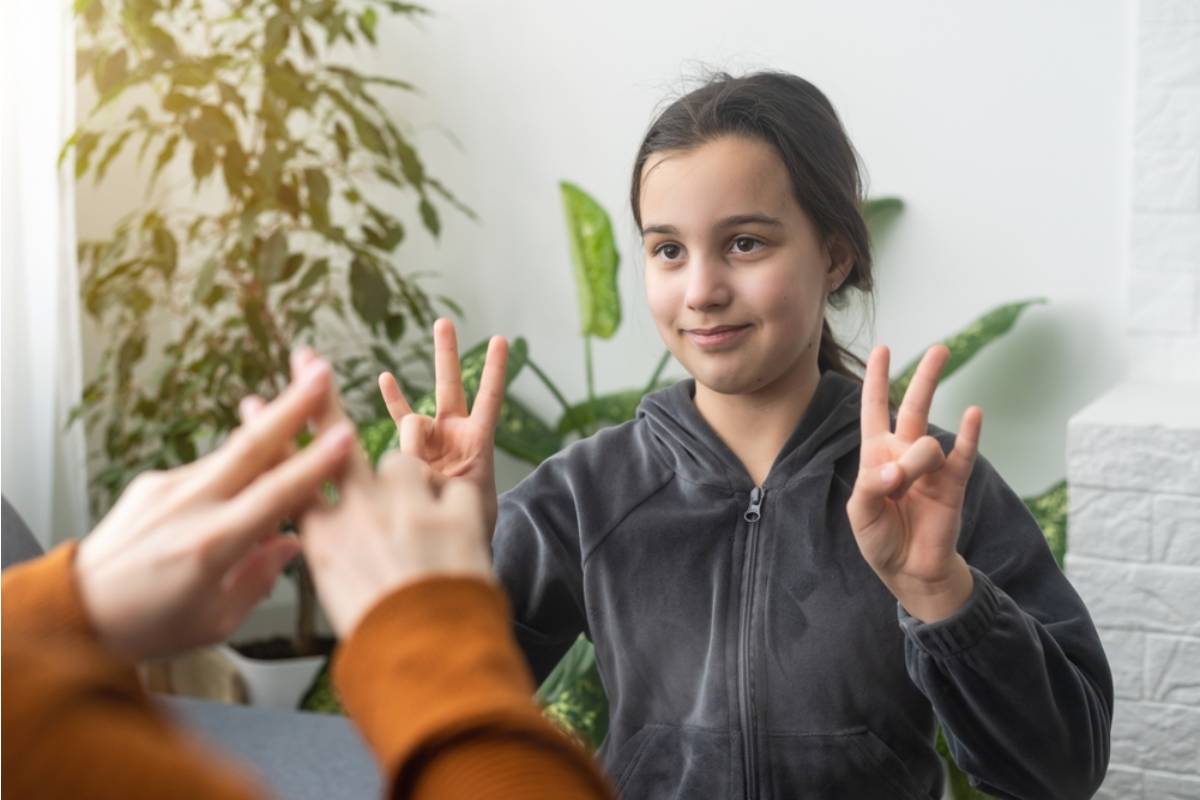
One evening I walked past my daughter Emma’s room while putting away laundry. Her laptop was open, but instead of watching a show, she was carefully repeating hand signs in front of the mirror. She paused every few seconds, replayed a lesson, and practiced again with complete concentration.
When I asked what she was doing, she quickly minimized the video and smiled.
“Just learning something,” she said.
Her answer felt unusually vague because Emma normally shared everything with me.
The Secret Lasted Only One More Day
I decided not to push the conversation. The next afternoon, I noticed a small notebook sticking out of her backpack while helping her find a permission slip. Inside were pages filled with hand shapes, finger spelling, and little sketches reminding her how to remember each sign.
At dinner, I gently asked whether she had started taking a new class.
Emma hesitated before saying, “I wanted to get better before I told anyone.”
That response made me even more curious.
A Classmate Changed Everything
Emma finally explained there was a student named Caleb in her seventh grade class who rarely spoke because he was nonverbal. He used a communication tablet during lessons, but he also knew American Sign Language. Very few students understood it.
Most kids were polite, but they avoided sitting beside him because conversations felt awkward. Emma admitted she realized Caleb spent nearly every lunch period eating alone while everyone else gathered with friends.
“I didn’t think it was fair,” she said quietly.
Lunch Looked Different From Across the Room
Emma described watching the cafeteria every day.
Whenever seats filled up, Caleb remained at the same corner table. Other students nodded politely as they walked past, but nobody actually stopped. Teachers believed he preferred being alone because he never asked anyone to join him.
Emma said something about that assumption bothered her.
“Nobody asked if he wanted company.”
Learning Without Telling Anyone
Instead of announcing her plan, Emma searched for beginner lessons online. Every evening she practiced the alphabet, greetings, and simple questions. She even labeled objects around her room with sticky notes to help herself remember signs.
She admitted she was terrified of making mistakes.
“I didn’t want Caleb to think I was making fun of him if I signed something wrong.”
Her concern showed just how seriously she took the effort.
The First Conversation Was Awkward
A week later, Emma gathered enough courage to sit beside Caleb during lunch.
She smiled and slowly signed, “Hello. My name is Emma.”
Caleb looked completely surprised.
For a second he simply stared.
Then he smiled so widely that Emma immediately relaxed. He signed back much faster than she could understand, then laughed when she looked confused. Instead of feeling embarrassed, they both started over one sign at a time.
Word Started Spreading Through School
Within days, a few students noticed Emma sitting with Caleb every afternoon.
Some asked why she was spending so much time with someone who barely talked. Others assumed she was completing a school assignment. Emma simply answered that they were becoming friends.
Her calm response slowly changed the conversation.
Soon classmates became curious instead of dismissive.
A Teacher Noticed Something Unexpected
Emma’s language arts teacher called me one afternoon.
“I wanted you to know something wonderful happened today,” she said.
She explained Caleb had volunteered to participate during a group activity for the first time all year. Instead of avoiding discussion, he confidently signed while Emma interpreted for classmates whenever necessary.
The teacher admitted she had never seen him engage so willingly.
The Friendship Reached Beyond School
One Friday, Emma asked whether Caleb could come over after school to work on a science project.
His mother dropped him off and immediately thanked us.
She explained Caleb often came home talking through his communication device about classmates but rarely mentioned spending time with them outside school. Recently, however, he had started describing funny conversations with Emma every evening.
She became emotional while telling us she had almost forgotten what that kind of excitement looked like.
An Unexpected Assembly Changed the Mood
Several weeks later, the school held an assembly celebrating acts of kindness. Emma assumed it would recognize volunteer work or fundraising projects. Instead, the principal invited Caleb onto the stage.
Using both his communication device and sign language, Caleb shared that someone had made him feel visible instead of invisible.
Then he signed toward Emma sitting in the audience.
The entire gymnasium became silent before erupting into applause.
Students Began Asking Questions
The assembly sparked conversations across the school.
Several students approached Emma asking if she could teach them simple greetings and common phrases. The school counselor noticed growing interest and suggested starting an after school sign language club.
What began as one quiet friendship suddenly inspired dozens of students to participate.
Nobody had expected such a small decision to create that kind of momentum.
The Cafeteria Slowly Changed
Over the following months, the corner table no longer stayed empty except for Caleb.
Different students joined him throughout the week. Some knew only a handful of signs, while others relied on his communication tablet when necessary. Conversations became slower than usual, but they happened.
Teachers admitted they had unintentionally mistaken isolation for preference.
Watching friendships grow forced everyone to reconsider those assumptions.
A Mother’s Pride Came From the Smallest Detail
One evening I asked Emma why she never told us what she had been doing.
She smiled.
I didn’t want people saying I was doing something special.
Then she added something that stayed with me.
“I just wanted Caleb to have somebody before everyone else noticed.”
Her answer revealed a level of compassion I had never fully recognized.
The Final Lesson Came From Caleb
Near the end of the school year, families were invited to an open house featuring student presentations.
Caleb and Emma worked together on a display about communication. During the presentation, Caleb signed a sentence while Emma stood quietly beside him without translating immediately. He wanted the audience to watch first instead of waiting for someone else to explain.
After a moment, he used his communication tablet to share the meaning.
“It feels good when people learn my language instead of asking me to always learn theirs.”
The room became completely still.
Driving home that evening, I realized my daughter had never set out to become an example for anyone. She simply noticed someone sitting alone and decided that waiting for someone else to help was not good enough.
One quiet decision in a middle school cafeteria had grown into new friendships, a school club, and a community that finally understood inclusion was built through small actions repeated consistently. Sometimes the biggest change begins with a single person choosing an empty seat that everyone else keeps walking past.