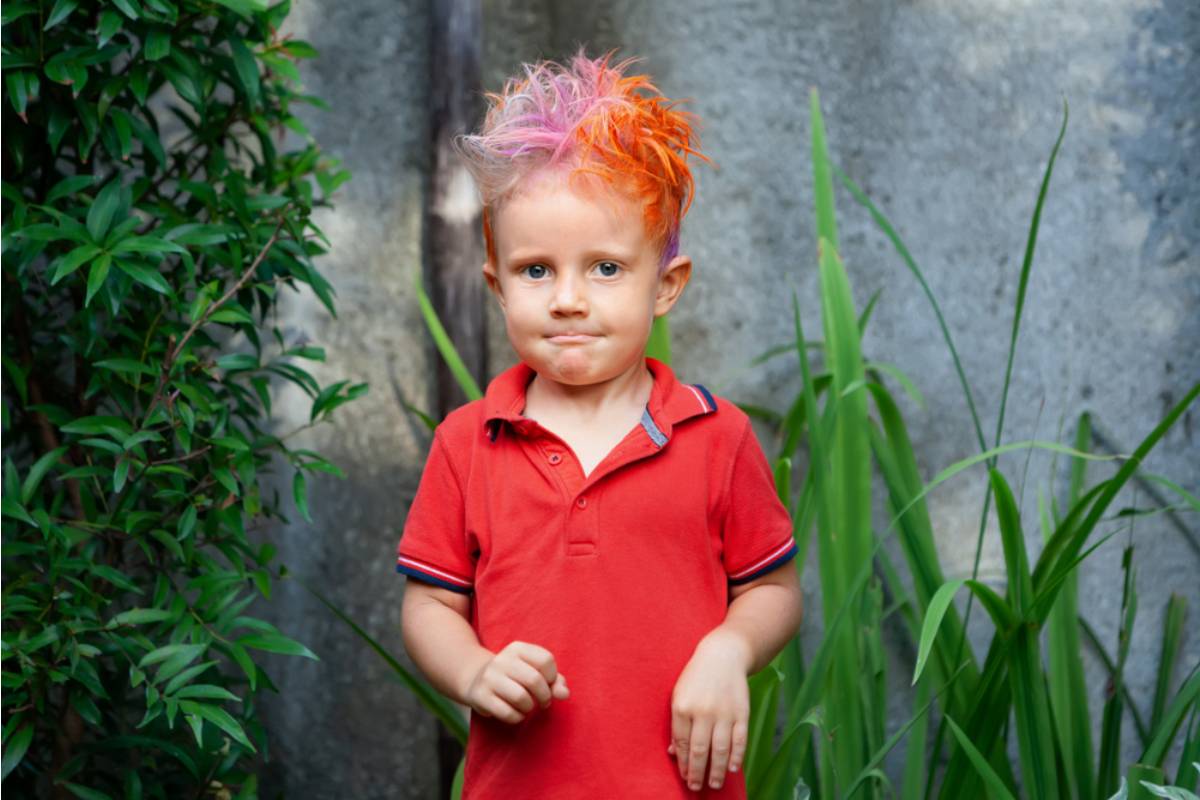
A Mom Says Her 5-Year-Old Wants Rainbow Hair, but One Part of the Plan Has Her Worried About More Than Just Looks

A person shared his story about his five-year-old daughter, who had recently become fascinated by the idea of having brightly colored hair. She did not want a tiny streak hidden underneath her curls either, because her dream was apparently straight-up rainbow hair. Her parent had already suggested starting with only one or two colors, but that simple compromise opened the door to a much bigger question.
The family was not completely unfamiliar with unconventional hairstyles or bright colors. Her parent had experimented with plenty of unusual hair colors and styles over the years, so the little girl was growing up seeing that self-expression could take many forms. The real challenge was deciding how far was too far for a five-year-old who was suddenly very certain that rainbow hair was exactly what she wanted.
Her Parent Was Not Against the Idea
There was no strong objection to the idea of a child wanting to look different. In fact, the parent seemed to appreciate the confidence behind the request and liked the idea of allowing a child to explore personal style. The hesitation came from whether the process itself was appropriate for someone so young.
That made the conversation less about whether colorful hair looked strange and more about how much freedom children should have with their appearance. A response from a person pointed out that hair could always grow back, making the style itself fairly temporary in the grand scheme of childhood. But that did not solve the biggest issue sitting underneath the entire question.
The Bleach Was the Real Problem
Her natural hair was medium brown, very curly, and fine, which made the situation considerably more complicated. The bright rainbow colors she wanted would normally require lightening the hair first, and that meant bleach could become part of the process. Her parent was especially worried because the curls had been carefully cared for since she was a baby.
The concern was not about being afraid of unusual colors or worrying that the child would look silly. It was about damaging hair that was already delicate and taking a complicated chemical step for a five-year-old who might change her mind next week. Suddenly, the rainbow itself was not the risky part of the plan.
One Person Had a Very Simple Rule
One response from a person came with an immediate boundary: no bleach. Instead, the suggestion was to try something like hair chalk, which could add temporary color without committing to a chemical treatment.
The idea was appealing because it separated the fun part from the risky part. A child could wake up with bright purple or pink streaks, enjoy the excitement, and then simply wash it out later. It also gave the family a chance to see whether the fascination with rainbow hair lasted longer than a few days.
But Hair Chalk Had Its Own Catch
Another response from a person pointed out that temporary chalk does not always show clearly on darker hair. Since the girl’s natural color was medium brown, the family might not get the vibrant rainbow effect she had imagined from the start.
That person offered another possibility: brightly colored extensions that could be clipped in or braided into the hair. Extensions could create the dramatic look without requiring the child to permanently alter her natural curls. For a five-year-old with a very specific vision of what rainbow hair should look like, that could be a surprisingly good compromise.
The Temporary Option Started Winning People Over
Several responses from people seemed to land on the same basic middle ground. They were not necessarily against colorful hair, but they were much more cautious about anything permanent or damaging. One person summed up the general idea by saying that temporary options were the way to go because hair grows out anyway.
Another response from a person came from someone sitting beside a child who already had purple-striped hair. That person’s approach was basically simple: have fun with the color, as long as the method is safe and temporary. The story was starting to become less about saying no and more about finding a way to say yes without creating a bigger problem.
Then Someone Made the Five-Year-Old Argument
A response from a person pushed back on the entire debate by joking that five was simply too young to spend hours sitting through a bleaching process. The concern was not necessarily the final appearance but what the process would actually involve. A child who happily asks for rainbow hair might not be nearly as enthusiastic about sitting still while a chemical treatment is applied.
There was also a practical concern hiding inside that argument. Even if the child loved the finished result, the journey to get there could involve discomfort, a strong smell, and the possibility of irritation if the process was handled poorly. What sounded like a fun afternoon suddenly looked much less like a simple coloring project.
Some Parents Thought the Child Should Have More Freedom
Not every response from a person focused on caution. Some argued that children should be allowed to experiment with their appearance when the choice itself was not hurting anyone. From that perspective, unusual hair was just another way for a child to explore who she was.
One person shared an experience from growing up in a household that strongly opposed hair color. According to that story, the strict rule did not make the desire disappear and instead contributed to arguments and resentment. That response brought a different question into the conversation: could saying no too strongly make a harmless hairstyle feel like a major battle?
Someone Suggested Letting Her Test the Rainbow First
A particularly practical response from a person suggested using colorful extensions before touching the child’s real hair. The little girl could see what bright colors actually looked like against her curls instead of relying on an imagined version of the rainbow she wanted.
That small experiment could also reveal something important. She might love the look but decide she preferred certain colors, or she might discover that rainbow hair was not nearly as exciting once she actually saw it on herself. Either way, the family would get useful information without committing to bleach.
The Curly Hair Made the Decision More Personal
Another response from a person came from someone with curly hair who regularly colored it themselves. They explained that curls can sometimes survive bleaching and coloring, but they also acknowledged the importance of careful maintenance and conditioning.
That perspective likely offered some reassurance, but it did not erase the parent’s concern. There was a major difference between an adult choosing to repeatedly color their own hair and a five-year-old with fine curls who was only beginning to understand what different treatments could do. The parent was not just trying to preserve a hairstyle but something she had spent years teaching her daughter to love.
Some People Thought Five Was Simply Too Young
A few responses from people were much more direct and considered five too young for hair dye altogether. Their reasoning was straightforward: there were temporary alternatives, so there was no real need to introduce permanent color yet.
Another response from a person explained that a child that age might not fully understand what a long-lasting appearance change actually means. Five-year-olds can become completely obsessed with something and then abandon it when the next exciting idea comes along. In that context, temporary color offered a way to match the child’s enthusiasm without asking her to live with an adult-level decision.
The Rainbow Hair Debate Became a Question About Parenting
As more responses came in, the discussion revealed that the parents were really weighing two different values. One was protecting the child’s hair and teaching her that self-care matters, while the other was giving her room to experiment and express herself. Neither goal necessarily had to cancel out the other.
A response from a person suggested drawing a clear line specifically around bleach rather than around colorful hair itself. That distinction seemed to change the entire conversation because it allowed the child to have a bright, unusual style while saving the more damaging process for later. Suddenly, the answer was no longer simply yes or no.
Even the School Question Came Up
One response from a person brought up another factor that might matter more as the child gets older: appearance expectations at school. They said their feelings might be different about colorful hair for an older child if it began creating conflict with school rules or expectations.
For now, though, the five-year-old was mostly dealing with a family decision rather than a formal policy problem. She wanted rainbow hair because rainbow hair sounded fun, not because she was trying to make a statement about school or adults. That made the family’s immediate focus much simpler: find a safe way to let her have fun.
One Parent Chose a Wait-and-See Approach
A person shared his story about allowing one of his sons to grow his hair long when he was around seven, even though he personally preferred it shorter for practical reasons. His approach was to let his children make choices about their appearance as long as they thought through the consequences.
He explained that his older son sometimes got mistaken for a girl because of his long hair, but the family had discussed that possibility before he made the decision. The child understood what might happen and was comfortable with it. For the five-year-old asking for rainbow hair, the situation was different because the consequences of bleaching were less obvious and much harder for her to understand.
The Daughter’s Age Kept Bringing Everyone Back to the Same Point
The biggest dividing line in the responses was not whether colorful hair was acceptable. It was her age and the fact that achieving the exact look she wanted would likely involve bleach.
Some people were comfortable with temporary streaks, extensions, chalk, or other washable options. Others were fine with kids experimenting generally but believed chemical treatments should wait until children were older and better able to understand the process. The common thread was that the rainbow idea itself was rarely treated as the real problem.
The Parent Now Had Plenty of Alternatives
By the end of the discussion, the family had more options than it probably expected when the question was first asked. Colored clips, braided extensions, hair chalk, temporary color, toy wigs, and other washable accessories could all give the child a chance to experiment.
That meant the little girl did not necessarily have to hear a flat no. She could still have her rainbow moment while the adults kept control over the part of the process that concerned them most. Instead of shutting down her creativity, they could turn the whole thing into a series of smaller experiments.
The Twist Was That the Rainbow Was Never Really the Problem
What began as a question about whether a five-year-old should have “weird” colored hair ended up being much more complicated than that. The responses showed that many people were perfectly comfortable with unusual hairstyles, especially when the changes were temporary and safe.
The real sticking point was the bleach, particularly because the child had fine, curly hair that her parent had worked hard to care for. In the end, the most interesting part of the story was not whether the little girl would get rainbow hair, but whether her family could find a way to let her express herself without making her choose between creativity and healthy curls.