A Parent Says She’s Raising Three Kids Without a Village and Wonders How Grandma Managed Four, Until She Learns What Grandma Wasn’t Expected to Do

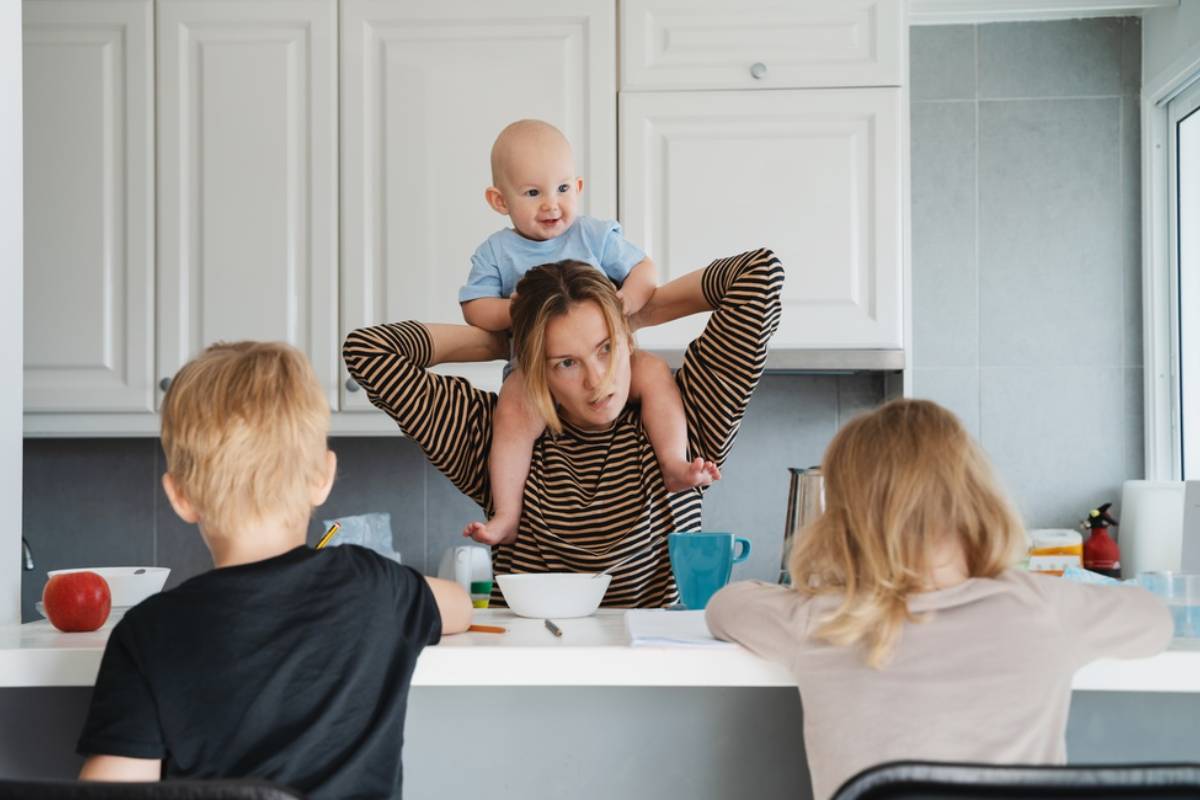
A parent shared what life currently looks like with two toddlers, another baby on the way, and almost no outside help. Every day seems to follow the same exhausting loop: feeding, changing, bathing, cuddling, cleaning, washing, loading the dishwasher, picking up toys, and starting all over again. With a husband working 13 days before getting just two days off, there is barely a moment to breathe.
Then Comes the Question About Grandma
Somewhere in the middle of all that exhaustion came a question many parents have quietly asked themselves: how did previous generations manage to raise several children without falling apart? Grandmothers are often remembered as women who somehow kept spotless homes, cooked every meal, raised multiple kids, and still had energy left over. But once people started telling their own family stories, that picture became a lot less simple.
One Woman Raised Four Kids Under Brutal Conditions
One person shared a story about a mother who had four children close together and handled nearly everything herself. She washed cloth diapers by hand, cooked from breakfast through dinner, cared for a large home, and even helped maintain a small farm filled with rabbits, ducks, and chickens.
She Had Almost No Help at All
The woman was also a recent immigrant who did not speak the language, did not drive, and lived in a rural area with long winters and very little contact with other people. Her husband worked 12-hour days and, according to the story, never changed a diaper. On paper, it sounds almost impossible.
Yet Her Daughter Saw Something Unexpected
The surprising part was not that she survived it. It was how she reacted when she later watched her own daughter struggle with modern parenting. Instead of proudly saying, “I did it with four kids,” she showed genuine sympathy and seemed to understand exactly how overwhelming life had become.
She Never Used Her Past as a Competition
She watched her daughter come home late, make dinner, pack lunches, drive children to activities, then spend the weekend doing laundry, cleaning, and trying to catch up. She could have easily compared hardships, but she didn’t. Instead, she recognized that parenting had changed and that today’s demands created a different kind of pressure.
Then the Bigger Pattern Started to Appear
A response from another person suggested that the biggest difference may be expectations rather than human endurance. In earlier decades, children were often expected to entertain themselves, spend long stretches outside, and tolerate boredom without an adult hovering nearby. The parent was still responsible for the basics, but the job did not always include being a full-time entertainer.
Grandma Wasn’t Running a Constant Activity Schedule
Several people pointed out that children once had far fewer organized activities, enrichment programs, and carefully planned routines. A child could disappear into the neighborhood for hours and return when it was time for dinner, while today many parents feel pressure to supervise nearly every minute. Suddenly, the mystery of Grandma’s magical stamina started looking less magical.
The House May Have Been Cleaner for a Reason
One person remembered a grandmother who raised six children while keeping the house spotless and preparing three homemade meals every day. But that grandmother eventually admitted something startling: she simply did not spend as much time with her children as modern parents often do. Years later, she seemed to compensate by becoming deeply involved in her grandchildren’s lives.
The “Village” Was Bigger Than People Remember
Another response pointed out that many families actually had a village, even when they did not call it one. Grandparents, aunts, siblings, neighbors, teenage babysitters, church groups, and other families often filled gaps that many parents now have to handle alone. A mother could have another woman across the street to talk to, a neighborhood teenager to babysit, or relatives stopping by throughout the week.
Older Kids Were Often Part of the System
There was another piece of the old formula that sounds almost shocking today: older children were frequently expected to help with younger siblings. Toddlers might be watched by a school-age brother, sister, or neighborhood kid while adults handled other responsibilities. It was a completely different standard of supervision, and it came with risks modern parents are much less willing to accept.
Kids Were Also Allowed to Be Bored
One person described growing up in a time when children were essentially told to go outside and figure out what to do. There were fewer toys, fewer screens, fewer enrichment activities, and far less pressure to turn childhood into a carefully managed schedule. What sounds like neglect by today’s standards was sometimes simply a culture built around independence and boredom.
And Then Came the Twist About What “Doing It All” Really Meant
By the end of the conversation, the answer to “How did Grandma do it?” became much clearer. She may not have been superhuman at all—she may simply have been operating under an entirely different set of rules, expectations, and support systems, while spending less time actively managing her children’s every moment.
The real twist is that today’s parent may actually be doing more of the hands-on parenting than Grandma ever had to do. Modern parents are expected to provide constant supervision, emotional support, enrichment, safety checks, activities, healthy meals, clean homes, and endless attention, often without the village that quietly carried some of the load generations ago.
The Exhaustion Suddenly Makes a Little More Sense
That does not make the older generation’s work easy, and plenty of grandmothers faced extraordinarily difficult circumstances. But one response may have captured the heart of the whole story: parenting today is simply hard in a different way. For the parent staring down life with a two-year-old, a three-year-old, a new baby, and almost no help, that realization may not solve the exhaustion—but at least it explains why Grandma’s version of “doing it all” can look so impossible from the outside.