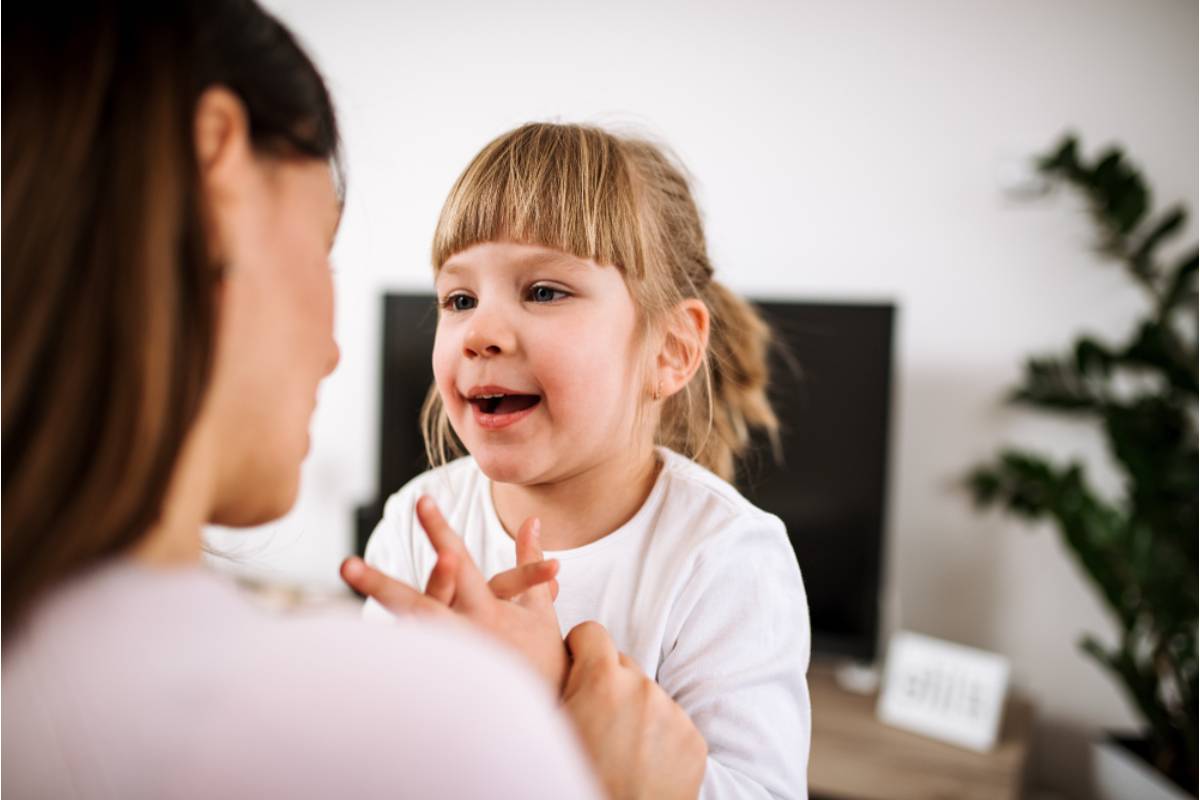
A Parent Says Their 3-Year-Old Understands the Family’s Second Language but Answers in English Every Time, and They’re Running Out of Ideas

A parent says they have a 3-year-old and a 5-month-old, and they hope to raise both children speaking two languages. Their older daughter seemed to be making great progress when she was around two and a half, happily learning numbers, colors, fruits, and the names of different body parts. Then, almost as quickly as those words appeared, many of them seemed to disappear.
Now the little girl is an extremely chatty English speaker, but the second language has become a different story. She appears to understand much of what her parent says, yet when it is time for her to answer, she nearly always switches back to English. What began as a simple question about teaching another language has turned into a much bigger family puzzle.
Her Daughter Once Seemed to Be Picking It Up Quickly
The parent remembered a time when the language lessons seemed to be going incredibly well. Their daughter could identify things from flashcards, recognize numbers, and name familiar objects, which made it feel like the pieces were falling into place. For a while, it seemed like she was building a strong little vocabulary without much trouble.
Then came the disappearing act. Words she had appeared to know suddenly seemed harder to recall, leaving the parent wondering whether she was actually forgetting the language or simply moving through a normal toddler phase. The fact that she continued talking constantly in English made the contrast even more noticeable.
English Came Naturally to Her
In English, the little girl had no trouble finding her voice. She was described as very chatty, comfortable putting sentences together, and eager to express herself during everyday conversations. That confidence made the struggle with the second language stand out even more.
The parent could ask her something in the family’s other language and get the feeling that she understood perfectly well. But instead of replying in that language, she would answer in English as though the second language had never entered the conversation. The parent began wondering whether understanding was happening without speaking ever catching up.
One Parent Was Much More Fluent Than the Other
The family had another challenge built into the situation. One parent speaks the second language fluently, while the other only has beginner-to-intermediate ability. That meant the more fluent parent was naturally doing most of the language work whenever they were around the children.
The difficulty was that work kept them away for part of the day. As a result, the little girl had fewer opportunities to hear and use the minority language in ordinary conversations, which concerned her parent. They wondered whether occasional exposure could really be enough to move her from recognizing words to speaking naturally.
They Were Already Using the Second Language Quite Often
The parent was not sitting back and hoping a few flashcards would magically create a bilingual child. They said they already spoke the second language to their daughter around 75 percent of the time. Even with that effort, however, the toddler usually responded in English.
That response pattern became one of the biggest clues in the family’s situation. She was not simply refusing to listen or showing no interest at all, because she appeared to understand what was being said. The real challenge seemed to be getting her to make the return trip and use the second language herself.
A Person Introduced Them to a Different Approach
A response from a person brought up a strategy known as OPOL, short for “one parent, one language.” The basic idea is that each parent consistently speaks a different language with the child, creating a regular association between that parent and that language. It immediately caught the family’s attention because the parent was already doing much of the second-language talking.
The suggestion also raised a practical question for the parent: would consistently using only the minority language mean changing every interaction they had with their daughter? They explained that they already used the second language most of the time, so they were trying to figure out how much more structured the approach needed to become.
Understanding It Was Actually Seen as a Good Sign
A response from a person reassured the family that young children commonly understand one language while responding in another. They described a similar situation involving a child who could play and communicate in a second language but still instinctively answered a parent in English. In that case, the parent simply repeated the child’s response in the other language and kept the conversation moving.
That idea gave the situation a slightly different look. Instead of treating every English answer as evidence that the second language was failing, the parent could view the child’s understanding as a foundation that was already being built. The speaking part might simply need more time, repetition, and opportunities to become automatic.
Some Families Use Different Languages Almost Without Thinking
Another response from a person described families where each parent naturally speaks their native language to the children. The shared family language might be something else entirely, but the children grow accustomed to hearing different languages attached to different people and situations. For those families, bilingualism becomes less like a lesson and more like part of the household routine.
The parent was also told that classes could become useful later, especially if they wanted their children to become comfortable reading and writing in the minority language as well. Someone shared a story about growing up around other children who spoke the same heritage language and eventually receiving regular instruction. The bigger message was that language learning could become much easier once it was surrounded by people, stories, and everyday experiences.
Flashcards Might Not Be the Real Answer
A person also pointed out that a 3-year-old can get bored with vocabulary drills surprisingly quickly. Flashcards may help introduce words, but knowing a word for a fruit is very different from using that word naturally while asking for a snack. The parent was encouraged to make the minority language part of ordinary conversation instead of treating it mainly as something to study.
That could mean talking through meals, describing what is happening during a walk, reading bedtime stories, singing songs, and narrating the little details of the day. The goal would be to give the child language connected to real life rather than isolated vocabulary cards. Suddenly, the family’s language challenge seemed less like a school assignment and more like a lifestyle change.
Media Could Become Part of the Family’s Plan
Several responses suggested increasing exposure beyond direct conversations. Songs, books, television programs, audiobooks, and other children’s media could all be switched into the minority language. The idea was especially relevant because children often encounter the dominant community language everywhere else around them.
One person described raising a child who speaks three languages and said consistent exposure through music, books, and other media helped make the languages part of everyday life. Instead of waiting for the child to sit down for a lesson, the family could quietly surround her with the language throughout the day. For a busy household, that might make regular exposure easier to maintain.
Then Someone Suggested There Was More to Language Than Vocabulary
A response from a person argued that children need much more than individual words if the goal is eventually fluent speech. Hearing full sentences, grammar, conversations, stories, and natural reactions gives children information they cannot get from memorizing vocabulary alone. That made the parent’s original focus on flashcards seem almost too narrow.
The little girl already had a major advantage because she was hearing the language directly from a fluent parent. The challenge was turning that exposure into something she wanted to actively produce. The more the language became associated with jokes, games, requests, family routines, and genuine conversation, the less it would feel like a test she had to pass.
Consistency Appeared to Be the Common Thread
Although the people responding had different experiences and suggested different methods, one theme kept appearing. The minority language needed to be heard regularly and used naturally rather than appearing only during special practice sessions. One person described a multilingual household where different relatives, caregivers, schools, and communities all contributed to the children’s language exposure.
Another family explained that they had once tried passing on a different language through one parent, but the plan became difficult because that parent worked long hours and did not have enough time to use the language with the child. Eventually, the family stopped that language effort and focused on the languages the children were actually hearing consistently. It was a reminder that even a good strategy can become difficult when daily life keeps getting in the way.
A Different Response Focused on Identity
One response from a person offered an idea that went beyond methods such as OPOL. They suggested that children may have more motivation to speak a family language when they understand that it connects them to people, traditions, places, and their own background. Visiting relatives, learning about a country of origin, celebrating traditions, and having real relationships tied to the language could give the child a reason to keep using it.
That struck at a deeper issue hiding underneath the family’s question. English was clearly useful because it was the language surrounding the child every day, while the second language needed something that made it personally meaningful. If a toddler begins to associate the language with grandparents, favorite songs, family trips, stories, or special routines, it can become much more than another set of words to memorize.
Her Parents Still Have Plenty of Time
The family is only at the beginning of this journey, and the youngest child is just five months old. That means there is still plenty of opportunity to shape the home environment before both children grow older and their language habits become more established. The parent may not yet know which combination of routines, exposure, and conversation will work best.
For now, the biggest clue may be the fact that the 3-year-old already appears to understand much of the second language. Her English responses do not necessarily tell the whole story, especially when she is still developing two language systems at once. What looks like a setback to an anxious parent could simply be one stage in a much longer process.
The Toddler May Have Been Giving Them an Answer All Along
The parent began by wondering why their daughter could learn words one week and seem to forget them the next. But throughout the discussion, another possibility kept emerging: perhaps the child was not losing the language at all. She may have been quietly absorbing it, understanding it, and choosing the language that felt easiest when it was time to speak.
That makes her English replies less of an ending and more of a clue. The family now has several possible ways to increase the amount of meaningful second-language interaction without turning every conversation into a lesson. And with a second baby growing up in the same environment, the parents have an opportunity to make the family’s other language feel like an ordinary part of childhood rather than something that only comes out when someone opens a flashcard box.