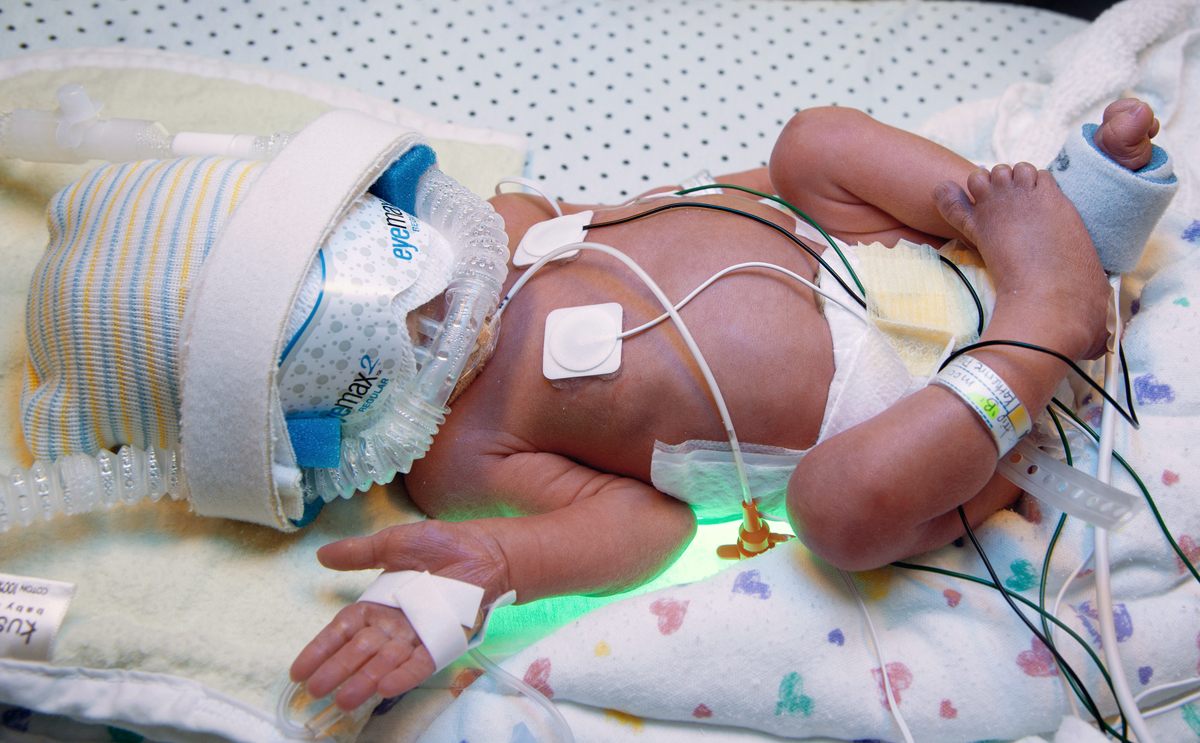
Keyana Hardiman’s Twins Were Born at 26 Weeks, and Her 1-Pound Daughter Zailee Turns 100 Days Old Tuesday While Her Brother Waits at Home

Dréston has been home since the beginning of November. His twin sister, Zailee, is still in the neonatal intensive care unit, and on Tuesday she turns 100 days old.
Their mother, Keyana Hardiman, gave birth to the twins at 26 weeks in August, WFIE 14 News in Evansville, Indiana, reported on Nov. 16. Dréston weighed 2 pounds at birth. Zailee weighed 1 pound. Nurses now expect her to join her brother at home this week.
Two Babies, Two Very Different Starts
Born the same day, the twins took different paths through the NICU. Dréston was strong enough to leave first, and he now weighs more than 7 pounds. Zailee, the smaller twin, has spent her first months learning to eat and breathe on her own. She has grown to more than 6 pounds.
Registered nurse Piper Carr told the station, “They fought every issue from the get-go.” Another nurse, Isabel Winkler, explained that for babies born this early, every system is affected, from breathing to digestion to eating.
Hardiman described the NICU stay as one of the most traumatic experiences of her life. She told the station she is open about it, and that whenever she talks about her children, she makes a point of mentioning that they are NICU babies.
Where 26 Weeks Falls
The Centers for Disease Control and Prevention counts any baby born before 37 weeks as preterm, and reports that about 1 in 10 U.S. infants was born preterm in 2022. At 26 weeks, the Hardiman twins arrived about 14 weeks before a full-term due date.
The March of Dimes classifies babies born before 32 weeks as very preterm and says those born before 34 weeks are the most likely to have health problems. The group says preemies are usually ready to go home when they weigh at least 4 pounds, can stay warm without an incubator, can feed and steadily gain weight, and can breathe on their own. Both twins are now well past that weight.
The National Institute of Child Health and Human Development says the causes of preterm labor are complex and not well understood, and that there is currently no reliable way to predict it or prevent it, though some steps can help delay delivery.
A Reunion the Family Is Planning Around
With Zailee’s homecoming close, Hardiman’s family is already building its holiday plans around having both babies under one roof.
“Her brother definitely misses her. And their reunion is gonna be a handful,” Hardiman said. She joked to the station that the household is about to go from one screaming baby to two.
She also called the homecoming bittersweet. Over three months, she grew close to the nurses who cared for her children. She told WFIE they feel more like sisters, and that she owes them her life twice over.
Prematurity Month Puts NICU Families in Focus
Zailee’s milestone falls during Prematurity Awareness Month. The World Health Organization says about 1 in 10 babies worldwide is born preterm, and that in high-income countries almost all babies born before 32 weeks now survive, thanks to care such as breathing support, skin-to-skin contact and early breastfeeding.
Parent Diaries has followed other twins who arrived early, including Valentina and Isabella Drysdale, born at 26 weeks weighing about 1.5 pounds each, who just turned 10, and Wisconsin midwife Amber Latsch’s twins, born at 32 weeks.
For the Hardimans, the 100-day mark is less a finish line than a countdown. Dréston is waiting at home, and if the nurses are right, his sister will be there with him before the week is out.
Get stories like this by email. Sign up for The Parent Diaries Letter.
This article was produced with AI assistance and edited for accuracy against the sources linked above.