A Dad Says His Six-Year-Old Daughter Came Home Scared After Her Grandfather Yelled at Her, and He Finally Saw His Childhood Differently

A person shared his story after spending years believing his parents might somehow become different grandparents than they had been parents. He had spent much of his childhood trying to understand their behavior, but he held onto the hope that his daughter would experience something better.
He wanted her to have the kind of loving grandparent relationship he remembered from his own childhood, especially because his grandmother had once been the person who made him feel genuinely safe and loved.
That hope finally collapsed during what should have been an ordinary afternoon on his parents’ farm. His six-year-old daughter had been happily feeding chicks when she accidentally stepped on some egg yolk on the ground. What happened next was small in the eyes of an adult who had grown accustomed to angry outbursts, but enormous through the eyes of a frightened child.
The Afternoon Started With Something Completely Innocent
The little girl had been enjoying herself on her grandparents’ farm, spending time around the chicks and proudly helping with the animals. Nothing about the afternoon appeared unusual or dangerous, and she was simply doing something a curious six-year-old might do. Then she accidentally stepped on some egg yolk that had landed on the ground.
It was an ordinary childhood accident, the kind of thing that could normally be cleaned up in seconds. Instead, her grandfather reportedly reacted with an explosive outburst that left the child frightened and confused. The person who shared the story would later realize that this tiny accident had exposed something he had spent years trying not to see.
Her Grandfather Suddenly Started Screaming
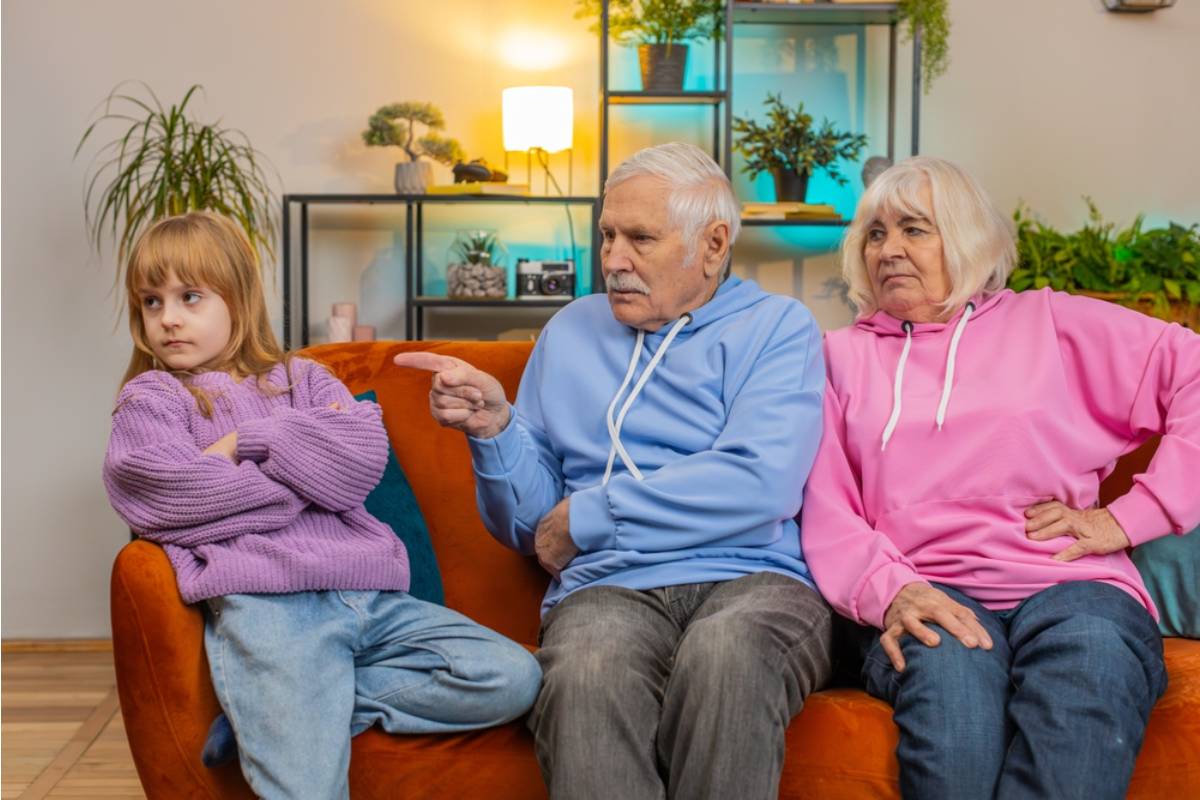
According to the person who shared his story, his father screamed at the little girl and asked whether she was “out of her mind.” He also reportedly called her something along the lines of “not normal,” despite the fact that she had simply stepped on an egg yolk by accident. There was apparently no warning that such a minor mistake would trigger such an intense reaction.
The girl’s response was not anger or defiance. She became scared and hid underneath the kitchen table before eventually running to her grandmother. For someone who had grown up around similar outbursts, the scene was painfully familiar, but seeing it happen to his own child made the behavior look completely different.
His Daughter Didn’t Understand What She Had Done Wrong
Later, the little girl told her parent what had happened, and the fear in her voice was what finally broke through years of denial. She reportedly seemed confused about why her grandfather had become so angry. More importantly, she believed the incident was somehow her fault.
That detail hit especially hard because the child had no history of accepting such behavior as normal. She hadn’t spent years learning that adults sometimes explode over tiny mistakes or that children are supposed to absorb the blame afterward. Her confusion became a mirror that showed her parent just how strange his own childhood had actually been.
Suddenly, His Own Childhood Came Back
For decades, the person had lived with his father’s unpredictable outbursts and had gradually convinced himself that there must have been some explanation for them. When a child grows up around behavior like that, it can become part of the background noise of everyday life. Something that should look shocking can eventually feel ordinary simply because it happens so often.
Watching his daughter hide under the kitchen table changed that perspective almost instantly. He could see the situation from the outside for the first time, without the years of conditioning that had taught him to minimize what happened to him. What had once been something he endured now looked like exactly what it was: a grown man frightening a six-year-old over an accident.
He Had Believed Grandparents Might Be Different
One of the biggest reasons he had maintained contact was his hope that his parents would treat his daughter differently. He told himself that being grandparents might soften them or bring out a warmer side that he hadn’t experienced as their child. He desperately wanted his daughter to have a relationship with grandparents that resembled the bond he once had with his own grandmother.
That hope had allowed him to overlook doubts that might otherwise have pushed him toward stronger boundaries. His daughter adored her grandmother, and his mother had seemingly been able to behave lovingly toward the child. The situation became much more complicated because the person wasn’t simply cutting off people he disliked, but reconsidering relationships his daughter genuinely enjoyed.
Then He Realized His Daughter Was Seeing Something He Had Missed
The child’s reaction became the turning point. She didn’t understand why her grandfather had behaved that way because she had never been taught to regard screaming and intimidation as normal family behavior. Her confusion was almost more painful than the yelling itself because it showed how far removed her experience was from the childhood her parent had known.
For the first time, he wasn’t asking whether his father’s behavior was really that bad. He was seeing it through his daughter’s eyes, and the answer became much harder to ignore. The same behavior that had once been explained away as temper, stress, or simply the way his father was now looked frightening when directed at a child he loved.
The Anger He Felt Was Different This Time
The person who shared his story said he had never felt rage like the rage that came over him after hearing his daughter’s account. His anger wasn’t only about what had just happened to her. It was also about realizing how many years he had spent believing his own experiences were somehow less serious than they actually were.
He immediately blocked his father and sent his mother a message warning that he would involve the authorities if anyone attempted to hurt his child. It was a dramatic change from the person who had spent years hoping his parents would eventually behave differently. Suddenly, protecting his daughter mattered more than preserving the family relationship.
A Response From a Person Said Something That Changed the Perspective
A response from a person offered a simple idea that resonated strongly with others: the way his parents had treated him was not proof that something was wrong with him. Instead, their behavior reflected a problem with the adults who were responsible for treating him well. That distinction can be difficult for children to understand because children naturally assume that adults’ reactions must somehow be deserved.
Another response from a person said becoming a parent can make that realization impossible to ignore. Seeing a child who has done nothing wrong being frightened by the same kind of behavior can suddenly expose the unfairness of what happened years earlier. In that sense, the daughter wasn’t only changing the way her parent viewed his own father, she was changing the way he viewed his own childhood.
Other Parents Said They Had Hoped for the Same Thing
Several responses from people described having the exact same hope. They had wondered whether their parents might become better grandparents, even after years of difficult behavior toward them. Some had spent months or years wrestling with guilt over limiting contact because they didn’t want their children to miss out on grandparents.
Those stories also carried a painful lesson. A response from a person explained that without meaningful accountability or evidence of genuine change, there was little reason to assume someone would suddenly behave differently with grandchildren. Another person pointed out that if the adults had never acknowledged what they did wrong, apologized sincerely, or changed their behavior afterward, there was already an answer hiding in plain sight.
The Grandmother Complicated Everything
The father wasn’t the only grandparent in the picture, and that made the decision much harder. The little girl reportedly adored her grandmother, who had seemed to be the loving grandmother the parent had always wanted for his daughter. The person admitted that living in a city apartment made the possibility of taking such a major relationship away from his daughter feel especially painful.
Yet another response from a person pointed out that the grandmother’s role couldn’t be separated entirely from the grandfather’s behavior. If she enabled him, minimized what happened, or failed to protect the child, then she might not be as safe as she appeared. The person sharing the story understood that concern and acknowledged that his mother had not been a safe person during his own childhood either.
He Remembered Who Had Really Been Abusive to Him
The person explained that his mother had actually been worse during his childhood in terms of psychological abuse. He remembered being subjected to situations where he was expected to apologize even after being hurt, including incidents where his hair had reportedly been pulled. His parents’ treatment had taught him a painful pattern in which the child was expected to absorb the consequences of the adult’s behavior.
That made his mother’s relationship with his daughter particularly confusing. She had apparently managed to control herself around the granddaughter in a way she had never managed around her own child. The person wondered whether maintaining that kindness required constant effort from her, because the difference between how she treated him and how she treated his daughter seemed enormous.
The Family’s Apologies Had Another Meaning Now
His daughter had apparently even heard his parents apologize before, something the person remembered very differently from his own childhood. When he was young, he said he had sometimes been the one forced to apologize while crying after being mistreated. The contrast was painful because it showed how differently his parents could behave when they chose to.
Now, however, the grandfather had frightened his granddaughter badly enough that the old pattern had suddenly become visible again. The parent could no longer tell himself that the older generation’s behavior belonged entirely to the past. His daughter had just experienced a version of the same dynamic, and he realized that protecting her meant refusing to let the pattern continue.
His Daughter’s Words Made the Decision Even Harder
The most heartbreaking part came when the little girl reportedly said she wished she could go back to before the incident happened. She also said she wished her grandfather would simply be gone. Those words showed how deeply frightening the experience had been from her perspective, even though the event itself may have seemed brief to the adults involved.
For her parent, hearing that was almost impossible to ignore. The child wasn’t asking for an explanation about why Grandpa had been angry. She was asking for distance from the person who had made her feel unsafe. At that moment, the parent had to decide whether maintaining a family relationship was worth asking his daughter to tolerate that fear again.
A Response From a Person Asked Who Was Actually Benefiting
A response from a person offered a blunt way to look at the situation by asking who benefited most from giving the grandparents continued access to the child. If the answer was primarily the adults who wanted a relationship on their own terms, then preserving that relationship might not be worth the risk to the child. The response emphasized that a child’s sense of safety should not be traded for an adult’s desire to remain involved.
Other responses from people echoed that idea in different ways. Some described cutting contact with parents and grandparents despite the sadness that came with losing extended family connections. They acknowledged that children might grow up without certain relatives, but argued that growing up with love and safety was more important than maintaining a relationship simply because someone was related to them.
Other Children Had Become the Turning Point for Their Parents
The story prompted many people to share their own moments of realization. One person described a parent screaming at a young child during a family photo because the child didn’t want to participate. The parent finally pushed back and said the child didn’t have to be in the picture, realizing that a small act of defending the child felt profoundly different from the silence they had experienced growing up.
Another person described watching a parent treat their own children badly and realizing that the behavior had never actually disappeared. Someone else explained that their own children had become the reason they finally went no contact. Across the stories, the same pattern appeared again and again: becoming responsible for a child can make a person recognize exactly what they should never allow to happen again.
He Started Seeing the Generational Pattern Clearly
One response from a person described the process as a generational reset. Their family had eventually discussed why they had limited contact with extended relatives, and the parent repeatedly explained that although breaking from the old family patterns was difficult, they were not going to repeat them. The idea was simple but powerful: the family could start a different story with the next generation.
That idea seemed to fit what was happening here. The person had spent years trying to understand his parents, hoping they would provide his daughter with something better. Instead, his daughter had unintentionally shown him that waiting for change could allow the same behavior to reach another generation.
The Daughter Had Already Started Teaching Him Something
The six-year-old had no complicated theory about family dynamics. She simply knew that her grandfather had yelled at her, that she was scared, and that she didn’t want to feel that way again. Her reaction was uncomplicated because she hadn’t yet learned the elaborate explanations adults sometimes use to excuse hurtful behavior.
That innocence became one of the most important parts of the story. Her parent realized that she didn’t need to understand why Grandpa acted that way before being protected from it. She only needed the adults responsible for her to take her fear seriously.
The Grandmother’s Future Was Still Uncertain
The person sharing the story hadn’t completely decided what would happen with his mother. He knew that his father would no longer have the same access to his daughter, but cutting off his mother was emotionally more complicated because the little girl genuinely loved her. He also admitted that his mother had so far been the grandmother he had always wished his daughter could have.
Still, he acknowledged that his mother’s behavior could no longer be judged only by how affectionate she was toward the child. If she defended her husband, minimized what happened, or allowed similar incidents to continue, the situation could change quickly. He said that if she made another inappropriate comment, he was prepared to block her too.
The Real Breakthrough Wasn’t the Block
Blocking his father was an immediate action, but the deeper change happened inside the person who shared the story. For years, he had viewed his childhood through the explanations he had inherited from the family. His daughter’s reaction gave him an entirely different perspective, one where the behavior was no longer normal simply because he had survived it.
That realization also replaced some of the guilt he had carried. Instead of feeling guilty for protecting his daughter from her grandparents, he finally felt proud of himself for doing what he wished someone had done for him. The pain of seeing the pattern repeat was real, but so was the realization that he now had the power to stop it.
The Cycle Finally Had Somewhere to End
The person ended up with a painful but powerful conclusion: his daughter would never again be alone with his parents. Whether that eventually meant complete no contact or some carefully controlled relationship remained uncertain, especially where his mother was concerned. But one boundary was no longer negotiable: his child would not be expected to tolerate frightening behavior simply to preserve a family connection.
A response from a person summed up the sentiment shared by many others: children can become the reason someone finally breaks a generational pattern. The person had once hoped his parents would be different grandparents, but his daughter’s fear showed him that hope wasn’t a protection plan. In the end, he didn’t need to change his parents to give his daughter a different childhood, because he could change what access they had to her and make sure the cycle stopped with him.