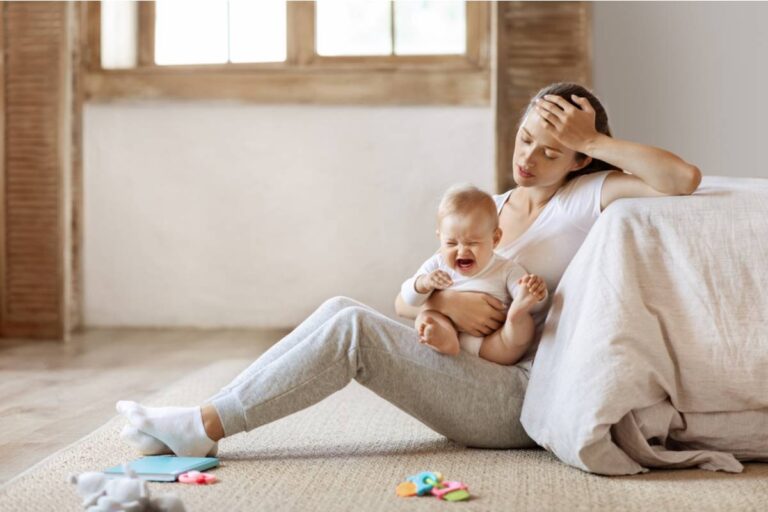
A Mom Says No One Wants to Be Around Her Three Kids, and She’s Worried They’ll Grow Up Wondering Why

A person shared his story about feeling increasingly isolated while raising three children under the age of four. With a 10-month-old, a 2-year-old, and a 3-and-a-half-year-old, everyday life already felt like a nonstop juggling act. What made things harder was the growing realization that friends and even extended family seemed reluctant to spend time with the children.
The family has three sets of grandparents because of divorce and remarriage, yet none seemed particularly excited about being around the kids. Some had even openly said they didn’t enjoy it, leaving the parent wondering whether having three young children had somehow made the family too difficult to include. The biggest fear wasn’t about the parent’s own loneliness, though, but whether the children would eventually notice that people seemed to keep their distance.
Three Little Kids Made Socializing Complicated
The parent explained that being a work-from-home mom with three children this young could already feel incredibly isolating. There was rarely a quiet moment, and even simple outings required planning around naps, snacks, diapers, and three different sets of needs. Finding people who could casually meet at a park suddenly felt much harder than it had before becoming a parent.
The children were also extremely close in age, which meant that taking all three somewhere wasn’t exactly a relaxing afternoon. One child was still a baby, another had just entered the dramatic toddler stage, and the oldest was still very young herself. The parent understood that this could be a lot for other people, but she hadn’t expected it to make her entire family feel unwelcome.
The Grandparents Were the Part That Hurt Most
Friends choosing not to invite a family of five was one thing, but the situation with the grandparents felt much more painful. There were three sets of grandparents in the children’s extended family, yet none seemed eager to spend time with them. That left the parent wondering how so many different relatives could independently reach the same conclusion.
A response from a person suggested that perhaps the grandparents were simply overwhelmed by having several very young children around at once. One idea was to try spending one-on-one time with individual grandparents and individual children rather than expecting everyone to handle the entire group. That could give the grandparents a chance to build a relationship with each child without feeling buried under toddler-level chaos.
Someone Pointed Out That Three Kids Isn’t Exactly Huge
Several responses focused on something the parent had begun to overlook: three children isn’t an unusually large family. One person pointed out that three kids could still be considered a fairly ordinary family size, especially compared with families raising four, five, or more children. The number itself, therefore, might not explain why everyone seemed hesitant.
That observation shifted the conversation toward other possibilities. Perhaps the issue wasn’t the children’s existence but how difficult outings had become, how the children behaved around other people, or even how the adults interacted. It was uncomfortable advice, but several people felt that looking honestly at those possibilities could help uncover what was really happening.
The Parent Was Encouraged to Look at the Children’s Behavior
One response from a person asked whether the children were particularly wild or difficult during outings. The person emphasized that normal toddler behavior could still be exhausting for adults who weren’t accustomed to it. Three young children could create a level of noise and movement that felt completely ordinary to their parents but overwhelming to everyone else.
The parent pushed back on the idea that poor behavior was driving people away. She explained that her middle child was dramatic but listened, while her oldest was shy and had a speech delay. The baby was described as a happy little “boob barnacle,” leaving the impression of three very young children with ordinary age-related needs rather than a household intentionally letting chaos run free.
Then the Family History Added Another Layer
The situation became more complicated when the parent explained that her husband had been an only child. His parents weren’t accustomed to having several little children around and apparently struggled to adjust to the noise and demands of a larger young family. That offered at least one possible explanation for why the grandparents weren’t naturally comfortable with the situation.
Her own parents had another issue entirely. They were deeply religious and were reportedly still upset that their daughter had her oldest child before marriage. Suddenly, the family’s lack of involvement looked less like a universal judgment against the children and more like a mixture of personalities, expectations, family history, and unresolved feelings.
Other Parents Had Experienced Something Similar
The story resonated strongly with another person who had three children in less than four years. That family had also felt as though relatives considered their children “too many” and eventually stopped expecting much support from them. Their children were now older, but the parents had learned to build their lives around people who actually wanted to participate.
Their experience became one of the clearest reminders that family support isn’t always guaranteed simply because people share a last name. They eventually used playgroups, daycare, summer programs, and other community activities to create connections. Their children developed friendships and relationships outside the family, giving everyone a much larger circle of support.
One Response Suggested Finding the “Big Family” Crowd
A recurring piece of advice was to stop trying to fit into social circles that weren’t comfortable with a busy household. Several people recommended looking specifically for families with three or more children. Parents with similarly sized families were more likely to understand the logistics without treating every snack spill or toddler meltdown like a crisis.
One response from a person described larger families almost like a secret club. Once families with several children found one another, the chaos that had seemed socially awkward suddenly became completely normal. Parks, libraries, school events, playgroups, and community activities were repeatedly mentioned as places where those connections could naturally form.
Sometimes the House Is the Problem, Not the Kids
Another person offered an interesting perspective that had nothing to do with disliking children. They explained that their own home was small and that they didn’t like having a large, noisy group of children inside it. They happily spent time with friends who had several children but preferred visiting those families at their larger homes.
That possibility gave the parent another practical angle to consider. Maybe some people weren’t avoiding the family because they disliked the kids at all. They might simply find the idea of having three toddlers running around their own home exhausting, especially if they didn’t have children or weren’t accustomed to that kind of energy.
The Youngest Children Were Making Everything Harder
A parent with three children of similar ages offered another important observation. Socializing often becomes easier as the youngest children grow out of diapers, naps, and constant adult supervision. A baby can require nearly continuous attention, making it difficult for a parent to participate in an adult conversation at all.
That meant the current situation might not be permanent. In another year or two, the children could become much more independent and capable of entertaining one another. What felt like an enormous social obstacle at 10 months old could look completely different once all three children could run, play, communicate, and follow basic routines together.
School Could Completely Change the Family’s Social Circle
Several people said their social lives improved dramatically once their children entered school. Suddenly, there were dozens of other parents dealing with homework, activities, birthday parties, pickup lines, and the same exhausting routines. The family wasn’t searching for friends in a vacuum anymore because the school community naturally created opportunities to meet people.
One response from a person said public school had been the turning point for their own family. Another suggested preschool, sports, clubs, libraries, and children’s activities as places where friendships could develop organically. The idea was simple: instead of waiting for the existing circle to accept the family, build a new circle around people who already understand the lifestyle.
One Family Had a Surprisingly Similar Experience
A particularly detailed response came from a person raising five children. Their family had also spent years feeling as though relatives weren’t interested in their children. Eventually, the parent stopped waiting for those relatives to suddenly become involved and started building relationships elsewhere.
The parent joined local playgroups and gradually became familiar with other parents and children. At first, doing that had been difficult because the parent was shy and uncomfortable meeting strangers. Eventually, those casual encounters became friendships, playdates, birthday invitations, and a support network that had nothing to do with biological family.
The Biggest Fear Was Whether the Children Would Notice
The original parent wasn’t only worried about finding friends for herself. She was afraid that her children might grow up realizing that grandparents and other relatives didn’t seem interested in them. That possibility appeared to hurt far more than being left out of an occasional gathering.
A response from a person with older children offered a surprisingly reassuring perspective. Young children often don’t feel the absence of a relationship they never really had, especially when they’re surrounded by other people who love and include them. As children get older, they may understand which relatives are absent, but that doesn’t necessarily mean they will feel unloved.
Older Children Can Build Their Own Village
The parent of five explained that her older children eventually became deeply involved in sports, dance, art, and other activities. Those activities created an entire network of people who knew the children, cared about them, and noticed when they weren’t around. Their world became much larger than the grandparents who had chosen not to participate.
That experience also changed how the children viewed their absent relatives. Instead of constantly wondering why certain grandparents weren’t involved, they had other adults and friends who showed up consistently. The parent said the children eventually seemed to understand that the relatives were the ones missing out.
The Children May End Up Being Less Bothered Than Their Mom
One of the most reassuring parts of the discussion was the reminder that children don’t necessarily interpret family relationships the same way adults do. A baby doesn’t know that a grandparent isn’t visiting often, and a toddler isn’t keeping score of invitations. Their emotional world is usually built around the people who consistently play with them, comfort them, and show up.
That doesn’t mean older children never notice family rejection. They can absolutely become aware of it as they mature, especially if relatives make the difference obvious. But the experiences shared by other parents suggested that a child surrounded by genuine friendships and supportive adults can still grow up feeling deeply connected.
The “Village” Might Have to Be Built From Scratch
One phrase from the responses captured the heart of the situation: the village a family needs isn’t always the village it was given. The parent had already started reaching out to local groups, hoping to find people willing to meet at parks and spend time together. That effort might feel awkward at first, but several people insisted that persistence eventually pays off.
Finding the right people could take months rather than days. The family didn’t necessarily need dozens of new friends, either. A few parents with similarly aged children could completely change the family’s social life, especially if everyone understood that sometimes a successful playdate simply means nobody ended up crying for more than five minutes.
The Twist Was That the Kids Might Not Be the Problem
As more details emerged, the story became less about three supposedly “unlikable” children and more about a family struggling to find people whose lives fit theirs. The oldest was shy, the middle child was dramatic but listened, and the youngest was a cheerful baby. Nothing described them as unusually difficult, yet their parents repeatedly encountered people who viewed three young children as too much.
That left the parent facing an uncomfortable but potentially freeing realization. Maybe she didn’t need to convince existing relatives and friends to love her family’s lifestyle. Maybe she needed to stop measuring the children’s worth by who invited them somewhere and start building relationships with people who naturally welcomed the whole noisy package.
A Different Kind of Family Could Be Waiting
The responses repeatedly pointed toward the same destination: other parents. Families with several children, parents navigating similar ages, and people already comfortable with a little chaos might understand this household in a way that longtime friends simply couldn’t. A playground, preschool, library program, church playgroup, or school could become the place where those connections finally started.
For now, the parent may still have difficult days when the house feels crowded and the social calendar feels painfully empty. But her children have something important that she may be underestimating: they have each other, and they still have years to build relationships with people outside the family. The story that began with a fear that nobody liked the kids may ultimately become a story about a mother discovering that her family’s real village just hadn’t found them yet.