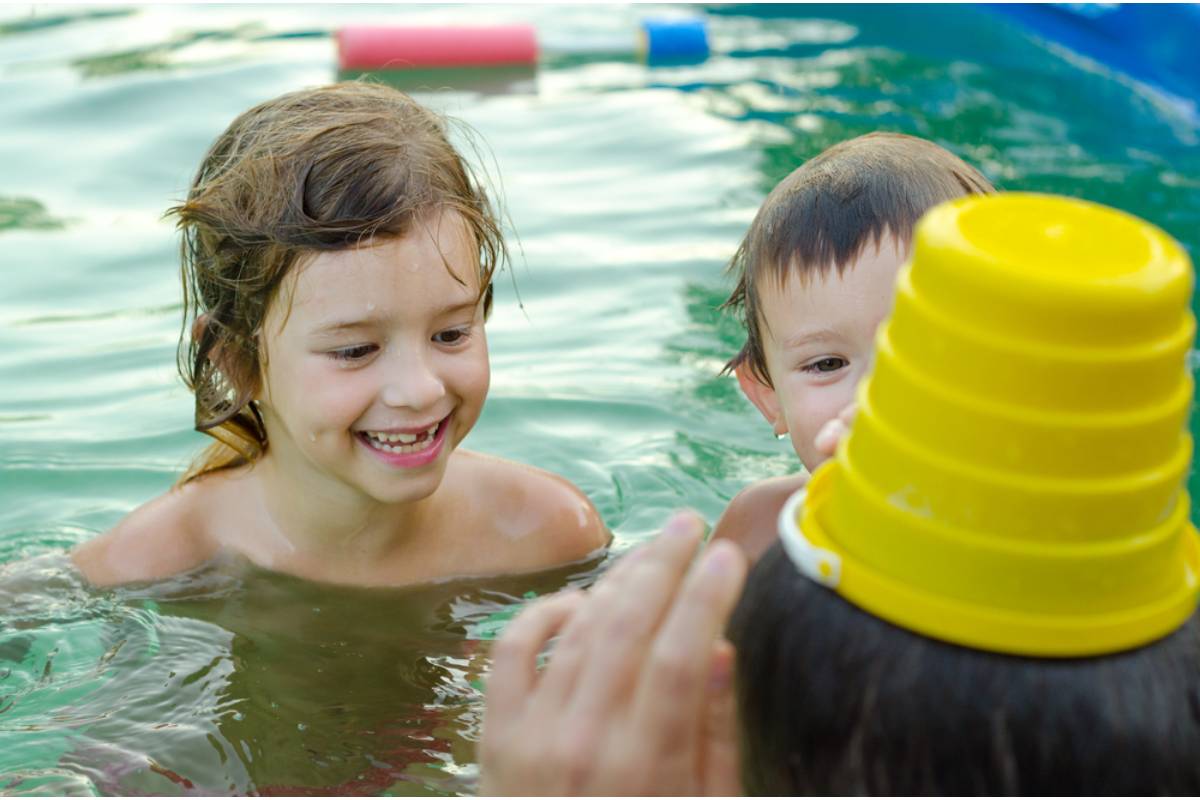
Dad Says He Refused to Let His Brother’s Kids Stay Unsupervised in His Pool Area After a Near-Miss Last Summer, Now He’s Being Called “Paranoid and Rude”

Last summer, the family gathered at his house for what was supposed to be a relaxed weekend cookout. The kids were excited, running between the backyard and the pool while the adults stayed near the grill. At one point, he noticed a group of children near the deep end without any adult standing close enough to react quickly. One child slipped on the wet edge and dropped into the water unexpectedly. He got to them in time, but the moment stuck with him longer than the rest of the day.
The Memory That Would Not Fade
Even after everyone left that evening, he kept replaying how quickly things could have gone differently. The pool had safety rules posted, but kids rarely paid attention when they were playing together. He remembered how no one immediately noticed the slip except him. The idea that a few seconds of distraction could turn serious stayed in his mind for days. It stopped feeling like an accident and started feeling like a warning.
The Next Family Visit Gets Tense
When his brother’s family planned another visit later that summer, he decided to set a boundary about supervision near the pool. He told his brother that the kids could swim, but only if an adult stayed within arm’s reach. His brother laughed it off at first, saying the kids were fine and already knew how to swim. The response made him feel like the previous incident was being brushed aside. He repeated the condition more firmly, which changed the tone of the conversation.
A Simple Rule Turns Into an Argument
The discussion escalated when his brother said he was being overly cautious and treating the kids like they could not handle themselves. He explained that it was not about ability, but about unpredictability around water. His brother insisted that constant supervision was unnecessary and insulting. Other family members nearby started to notice the disagreement forming. What began as a safety request was now turning into a debate about trust.
The Visit Happens Anyway
Despite the tension, the visit still took place the following weekend. The kids arrived excited, immediately heading toward the pool area. He repeated the rule about supervision before anyone got in the water. His brother responded with a short nod but did not position himself near the pool. The atmosphere felt polite on the surface but noticeably stiff underneath.
Small Moments That Build Pressure
As the afternoon went on, he kept noticing how quickly the kids moved between the shallow and deeper areas. Laughter and splashing made it harder to keep track of everyone at once. At one point, he saw a child trying to reach a floating toy drifting toward the middle. No adult reacted immediately until he called out sharply. The moment passed safely, but it reinforced his earlier concern.
The Comment That Sparks It Again
Later, during lunch, his brother made a comment about not needing a lifeguard in a private backyard. A few relatives chuckled, but the remark landed poorly with him. He said again that he was not trying to control anyone, only prevent a repeat of what had already happened. His brother replied that nothing had actually happened last time beyond a minor scare. The word minor made the conversation feel even more divided.
The Decision to Limit Access
After the visit, he told his brother that future swimming at his house would require direct supervision from an adult assigned to watch the kids. He clarified that this was not negotiable after what he had seen. His brother reacted with frustration, saying it made family gatherings feel restricted and unwelcoming. The conversation ended without agreement, only frustration on both sides. From that point on, visits became less frequent.
Family Opinions Start Splitting
When other relatives heard about the disagreement, opinions quickly divided. Some agreed that safety rules were reasonable given what had happened before. Others felt the restriction was exaggerated and made gatherings less relaxed. He noticed that invitations to group events started becoming less direct. The topic of the pool itself became something people avoided mentioning around him.
A Message That Sets the Tone
One evening, he received a message from his brother saying he was being paranoid and rude for enforcing strict supervision. The message suggested that he was treating family like strangers in his own home. He read it more than once before responding. He said he would rather be called cautious than take another risk near water. There was no reply after that.
The Kids Notice the Distance
Over time, the children started picking up on the changed dynamics even if no one explained it to them. They still played together during family events, but the pool was no longer a shared space without limits. His brother’s kids sometimes asked why rules had changed compared to before. He kept the explanation simple, saying safety expectations had been updated. The kids accepted it without argument, but the energy was different.
A Backyard That Feels Different Now
At later gatherings, the pool area stayed quieter than it used to. Conversations stayed closer to the house, away from the water. His brother still attended some events, but interactions were shorter and more formal. The earlier closeness between families did not fully return. The pool remained in the background of every visit, not as a place of fun anymore, but as the reason things had shifted.