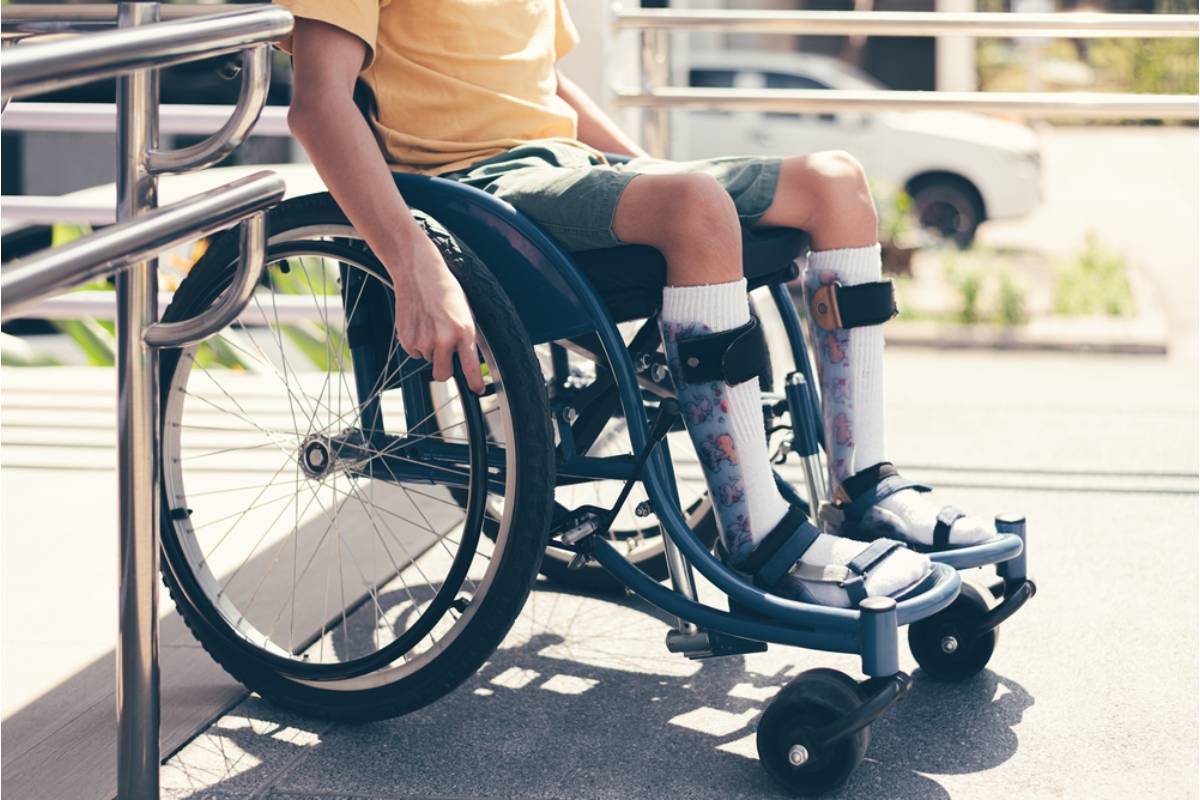
Dad Says His Son’s School Refused to Let Him Use His Wheelchair Ramp During a Fire Drill Because It “Slowed Down the Line”

When Daniel got a call from his son’s school, he expected to hear a routine update about a fire drill. Instead, his ten year old son came home unusually quiet, refusing to talk about what had happened.
It took nearly an hour before the truth came out. What Daniel heard left him stunned because the issue was not the drill itself. It was the message his son believed he had received about where he belonged when everyone else was trying to stay safe.
The Ride Home Felt Unusually Silent
Ethan usually filled the drive home with stories about recess, science experiments, or whatever joke had made his class laugh that day. This afternoon he stared out the passenger window without saying much. Daniel tried asking about school, but every answer was only a few words long.
When they pulled into the driveway, Ethan stayed seated even after the engine stopped.
Daniel looked over.
“Rough day?”
Ethan quietly nodded.
A Simple Question Opened the Conversation
Inside the house, Daniel gave Ethan a snack and waited instead of pressing him for answers. After a few minutes, Ethan finally spoke.
“We had a fire drill.”
Daniel smiled.
“Those are never fun.”
Ethan looked down at his hands.
“I wasn’t allowed to use the ramp.”
For a second, Daniel thought he had misunderstood.
The Explanation Made No Sense
Ethan explained that students had lined up as usual when the fire alarm sounded.
As his class reached the accessible ramp near the main entrance, a staff member stopped him.
She directed him toward another exit that required waiting until every other class had already passed.
According to Ethan, someone said the ramp needed to stay clear because using it slowed the line for everyone else.
He waited while dozens of students filed past.
Standing Still Felt Worse Than Moving Slowly
Ethan admitted the hardest part was not waiting.
It was everyone watching him wait.
Some classmates looked confused.
Others whispered questions.
One friend quietly asked if he had done something wrong.
Ethan shrugged because he honestly did not know.
By the time he reached the designated meeting area, every class had already assembled.
Daniel Asked for Clarification
The next morning Daniel called the school office.
The receptionist politely scheduled a meeting with the principal and the assistant principal.
Daniel assumed there had simply been a misunderstanding during the drill.
He expected someone to explain the evacuation procedure.
Instead, the meeting became far more uncomfortable than he imagined.
The First Response Left Him Speechless
The principal listened carefully before responding.
“Our goal is moving students outside as efficiently as possible.”
Daniel nodded.
“I understand.”
The principal continued.
“Sometimes adjustments have to be made during drills.”
Daniel leaned forward.
What adjustment required separating my son from his class?
The room fell noticeably quiet.
Ethan’s Teacher Shared a Different Perspective
Later that afternoon Ethan’s classroom teacher requested to speak privately with Daniel.
She looked genuinely upset.
“I didn’t agree with what happened.”
She explained that she had expected Ethan to leave with the rest of the class using the accessible route they practiced during classroom discussions.
Instead, another administrator overruled the plan at the last moment.
“I should have spoken up sooner,” she admitted.
Classmates Started Asking Questions
The following day, several students approached Ethan during recess.
“Why did they make you stay behind?”
“Weren’t you supposed to leave with us?”
One child innocently asked whether wheelchairs were not allowed during emergencies.
Ethan answered as best he could.
But every question reminded him of standing alone while everyone else continued walking.
He began dreading the possibility of another drill.
A Parent Meeting Changed the Direction
Daniel requested a formal meeting involving school administrators, Ethan’s teacher, and the district’s accessibility coordinator.
Instead of arriving angry, he brought written notes describing exactly what Ethan had experienced.
He focused less on assigning blame and more on understanding the school’s emergency procedures.
The accessibility coordinator listened without interrupting.
Then she asked one question.
“Where is the written policy that says accessible exits should be delayed?”
Nobody around the table could produce one.
A Review of the Emergency Plan Revealed a Problem
Over the next week, district officials reviewed evacuation procedures throughout the building.
They discovered that while accessible routes existed, staff training had been inconsistent.
Some employees believed keeping hallways moving quickly mattered most.
Others believed students requiring mobility devices should always evacuate alongside their classmates.
The conflicting instructions created confusion.
That confusion had directly affected Ethan.
Ethan Spoke for Himself
At a follow up meeting, Daniel asked Ethan if he wanted to share his experience.
Ethan quietly agreed.
“When everyone else kept walking, I felt like I wasn’t part of my class anymore.”
He paused before continuing.
“I know I’m slower.”
“But I’m still supposed to leave with everybody else.”
Nobody interrupted him.
His words carried more weight than any policy document.
Practice Looked Different the Next Time
Several weeks later the school held another fire drill.
This time staff members had already reviewed updated procedures together.
Ethan lined up with his classmates as usual.
When they reached the accessible ramp, everyone stayed together.
A staff member simply reminded students to leave enough space without rushing.
The class reached the outdoor assembly area at nearly the same time as the other grades.
No one had been left behind.
An Unexpected Gesture From Classmates
After the drill, Ethan expected the day to continue normally.
Instead, one classmate smiled and said, “That worked way better.”
Another added, “We all got outside together.”
The comments sounded simple.
But to Ethan, they meant everything.
Nobody mentioned delays.
Nobody acted as though his wheelchair had caused a problem.
He was simply another student participating with the class.
The Principal Addressed the Entire Staff
At the next faculty meeting, the principal spoke openly about the incident.
She acknowledged that emergency planning must protect every student without making anyone feel excluded.
She encouraged staff members to think beyond speed alone and consider whether procedures preserved dignity as well as safety.
Teachers later shared ideas about improving accessibility during future drills.
The discussion became part of ongoing staff training rather than a forgotten mistake.
One Lesson Extended Beyond Emergency Procedures
Months later, Daniel asked Ethan whether he still thought about that first fire drill.
“I do sometimes,” Ethan admitted.
“But I remember the second one more.”
Daniel smiled.
“What do you remember?”
Ethan answered without hesitation.
“I remember nobody telling me to wait.”
Driving home that afternoon, Daniel realized the biggest victory had not been changing an evacuation procedure. It had been changing how his son felt when he entered school each morning. Safety plans mattered, accessible ramps mattered, and clear communication mattered. Yet what stayed with Ethan most was the feeling that he belonged beside his classmates instead of behind them.
Daniel often shared the experience with other parents, not because he wanted to criticize the school forever, but because he believed every community could learn from it. Small decisions made during stressful moments often send lasting messages to children. When schools plan with every student in mind from the very beginning, no child has to wonder whether they are slowing everyone else down simply by needing the same safe path as everyone around them.