A Midwife Told a Utah Mom With a High-Risk Pregnancy to Start Upper-Body Workouts at 35 Weeks, and the Next Scans Surprised Her

At 32 weeks, Isabelle Fisher of Utah was on bed rest with a high-risk pregnancy. At 35 weeks, she was back to lifting weights on her midwife’s suggestion, and the scans that followed showed much stronger blood flow through her baby’s umbilical cord than doctors had expected, Newsweek reported on Oct. 27.
The improvement did not end the pregnancy’s complications. At 36 weeks the baby failed a non-stress test, and after about 20 hours of induced labor Fisher had an emergency C-section. Her daughter weighed 4 pounds, 5 ounces, spent three weeks in the NICU and is now healthy and active, Fisher said.
At 32 Weeks: Bed Rest and a Baby Measuring 4 to 5 Weeks Behind
Fisher, who had powerlifted before pregnancy and considered entering a competition, had heavy bleeding in her first trimester and credited her midwife with guiding her through it. By 32 weeks, doctors had told her to stop working and placed her on complete bed rest.
Her daughter was measuring about four to five weeks behind because of intrauterine growth restriction, or IUGR. Fisher linked the condition to a calcified placenta and poor blood flow through the umbilical cord. She was monitored twice a week with non-stress tests and ultrasounds and received steroid injections to help prepare the baby’s lungs in case of an early delivery.
The Cleveland Clinic describes IUGR as a condition in which a fetus grows more slowly than expected, with estimated weight below the 10th percentile for its gestational age. It says the condition develops because of an issue with the placenta or umbilical cord, among other possible causes, which limits the nutrients and oxygen the baby receives. Doppler ultrasound, which checks blood flow, is one of the tools used to diagnose it.
At 35 Weeks: A Midwife Suggests Lifting, Without Straining the Pelvic Floor
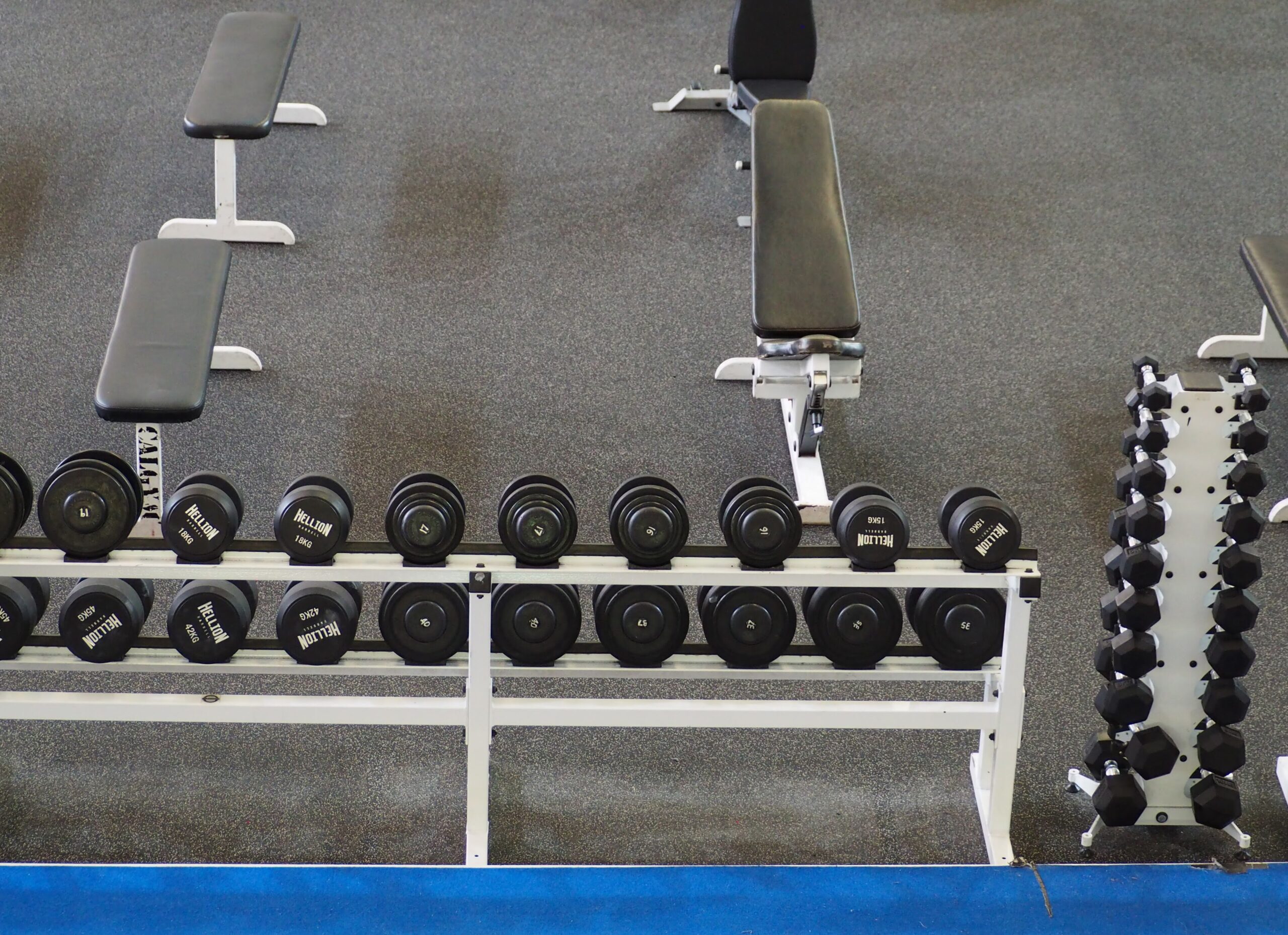
By 35 weeks, Fisher said, her blood flow had “decreased exponentially” on bed rest and was not improving. Her midwife suggested she return to the gym, focusing mainly on upper-body exercises and avoiding excessive strain on the pelvic floor. The hope was to improve blood flow through the cord.
Fisher said her midwife’s main concern was that she listen to her body, and she did only the occasional pelvic floor exercise and nothing that overly exhausted her.
After she started lifting again, ultrasounds showed a change. Fisher said that once she resumed lifting, the doctors “actually saw a much stronger flow through the cord than they were expecting.” She said each scan noted improvement.
At 36 Weeks: A Failed Test, 20 Hours of Labor and an Emergency C-Section
At 36 weeks, Fisher’s daughter failed a non-stress test for the first time, after passing about 15 earlier ones. An ultrasound that day showed the best cord blood flow the doctors had seen, but the baby was moving less. The team recommended delivery.
Fisher was admitted and induced, first with Cervidil and then Pitocin. She labored for about 20 hours, but her dilation was poor and the baby did not tolerate the contractions well, so she had an emergency C-section.
Both the monitoring and the early delivery appear in medical guidance on growth-restricted babies. Columbia Doctors lists nonstress tests, serial ultrasounds and Doppler flow studies among the ways IUGR is watched, and says that “if IUGR endangers the health of the fetus, then an early delivery may be necessary.” MedlinePlus says providers follow a suspected case with regular ultrasounds and nonstress tests, and that depending on the results, the baby may need to be delivered early. The Cleveland Clinic adds that a C-section may be recommended for some growth-restricted babies because vaginal deliveries can stress them.
What a Maternal-Fetal Medicine Specialist Says One Better Scan Does Not Prove
Dr. Jeffrey Chapa, national medical director of maternal-fetal medicine at Obtelecare, commented on exercise in pregnancy for Newsweek, and his caution was direct: “One improved measurement after resuming exercise doesn’t show that exercise caused it.” Blood flow measurements can vary, he said, “and that variability is exactly why high-risk pregnancies need consistent, ongoing monitoring by experienced specialists.”
Chapa also said exercise recommendations should be individualized, and that vigorous activity may not be appropriate when blood flow to the baby is already compromised. In other words, the scans that improved for Fisher are her experience, not proof that the same plan would help another pregnancy.
The American College of Obstetricians and Gynecologists frames exercise in general terms. The abstract of ACOG Committee Opinion No. 804, reproduced by the Ohio Perinatal Quality Collaborative, says that “in the absence of obstetric or medical complications or contraindications, physical activity in pregnancy is safe and desirable,” and that “some modification to exercise routines may be necessary.” Fisher’s pregnancy involved a complication, and her midwife’s plan limited her to mostly upper-body work.
Four Pounds, Five Ounces, Three Weeks in the NICU and a Healthy Report Now
Fisher’s daughter was born at 4 pounds, 5 ounces. She spent three weeks in the NICU and needed oxygen for two months. Fisher says she is now healthy and active.
The Cleveland Clinic lists breathing and feeding problems, low blood sugar and trouble regulating temperature among the issues newborns with IUGR can have. It also notes that most babies with IUGR do not have health complications and most catch up to their peers by age 3, though outcomes depend on the cause, the degree of restriction and when the baby is delivered. Columbia Doctors adds that, generally, the earlier and more severe the growth restriction, the greater the risks to the fetus.
Another family’s NICU journey, that of baby Quinn Hackett, born at 25 weeks weighing 13 ounces, shows how different those timelines can look. Fisher, for her part, called the midwife who guided her through the pregnancy “the best midwife on this planet.”
Get stories like this by email. Sign up for The Parent Diaries Letter.
This article was produced with AI assistance and edited for accuracy against the sources linked above.
Image: KeepActive Australia from Melbourne, VIC, Australia – CC BY-SA 4.0/Wikimedia Commons